
 EN
EN
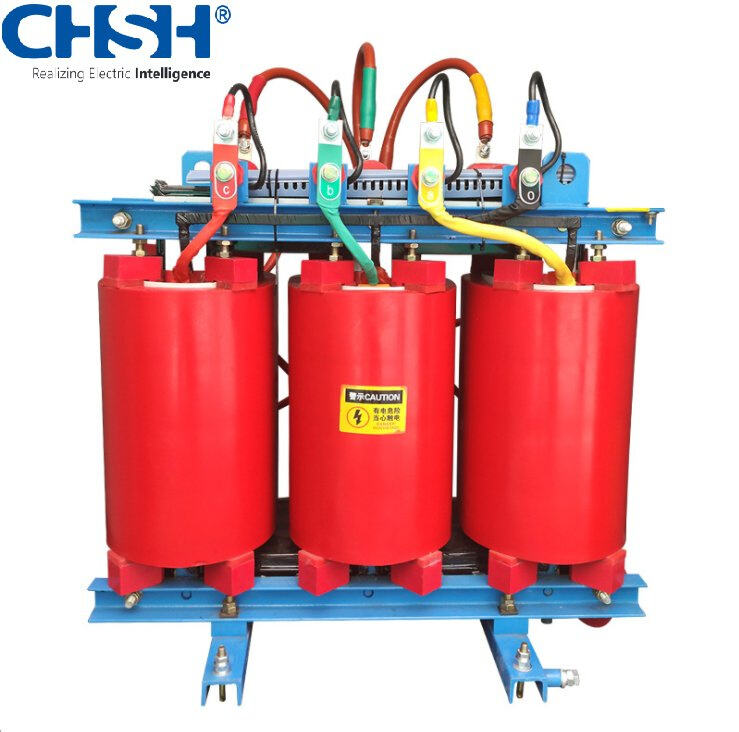
Fire safety is one of the most critical considerations in the design and operation of commercial buildings. Electrical infrastructure, particularly power distribution equipment, represents a significant fire risk when not properly specified. A dry type transformer addresses this risk directly by eliminating the flammable liquid insulation found in conventional oil-filled units, making it a preferred choice for architects, electrical engineers, and facility managers who prioritize occupant safety and code compliance.
Understanding exactly how a dry type transformer improves fire safety requires looking at its construction, its behavior under fault conditions, and the regulatory environment that governs its use in occupied commercial spaces. This article walks through each of those dimensions in practical detail, giving building professionals the decision-useful context they need when specifying power distribution equipment for offices, hospitals, shopping centers, data centers, and other high-occupancy environments.
The Core Fire Risk Problem with Conventional Transformers
Why Oil-Filled Transformers Pose a Hazard in Occupied Buildings
Traditional oil-filled transformers rely on mineral oil or synthetic fluid as both a coolant and an insulating medium. While this approach is effective for outdoor substations and utility-scale installations, it introduces a serious fire hazard when the equipment is located inside or adjacent to a commercial building. Mineral oil is combustible, and under fault conditions such as internal arcing, winding failure, or overheating, it can ignite and sustain a fire that spreads rapidly through electrical rooms and cable trays.
The consequences of an oil transformer fire in a commercial building are severe. Beyond the immediate threat to occupants, such fires produce toxic smoke, cause extensive structural damage, and can trigger regulatory investigations that result in prolonged building closures. Insurance underwriters are well aware of this risk profile, and many commercial property policies carry specific exclusions or premium penalties for buildings that house oil-filled transformers in indoor locations.
This is precisely the context in which the dry type transformer was developed and refined. By removing flammable liquid from the equation entirely, the technology fundamentally changes the fire risk profile of indoor power distribution.
How the Absence of Liquid Insulation Changes the Risk Equation
A dry type transformer uses air and solid insulating materials — typically cast resin or vacuum-pressure-impregnated (VPI) insulation systems — to perform the functions that oil serves in conventional units. There is no liquid to leak, no fluid to ignite, and no pressurized containment vessel that could rupture under fault conditions. This structural difference is the foundation of the fire safety advantage.
When a dry type transformer experiences an internal fault, the failure mode is fundamentally different from an oil unit. Rather than producing a flammable fluid release or an explosive pressure event, a well-designed dry type transformer tends to fail in a contained, localized manner. The solid insulation chars rather than burns freely, and the absence of a combustible medium means the fault is far less likely to propagate into a sustained fire.
For commercial building operators, this difference translates directly into reduced fire suppression requirements, simplified installation approvals, and greater flexibility in locating the transformer close to the loads it serves — including inside the building envelope itself.
How Dry Type Transformer Construction Supports Fire Safety
Cast Resin Insulation and Its Self-Extinguishing Properties
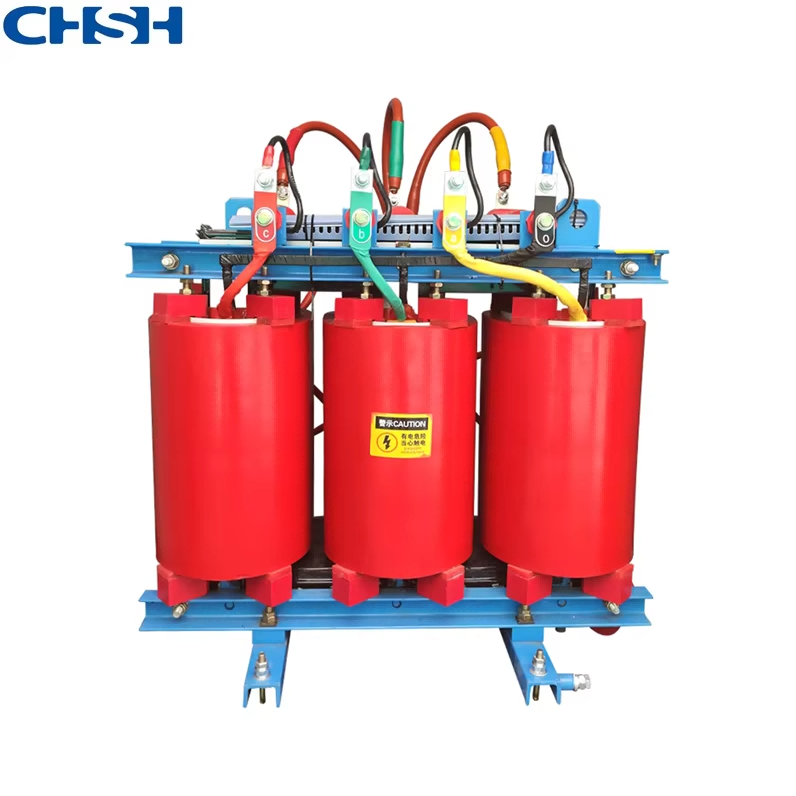
The most fire-resistant variant of the dry type transformer uses cast resin insulation, where the windings are encapsulated in an epoxy resin compound under vacuum conditions. This resin system is formulated to be self-extinguishing — meaning that if it is exposed to a flame source, it will not continue to burn once the external flame is removed. This property is quantified and tested under international standards, giving specifiers a verifiable basis for their fire safety claims.
Cast resin dry type transformers are classified under standards such as IEC 60076-11, which defines fire behavior classes. The highest classification, F1, indicates that the transformer produces minimal flame spread, low smoke density, and low toxicity of combustion gases. For commercial buildings where evacuation time and smoke visibility are critical safety factors, specifying an F1-rated dry type transformer provides a measurable and documentable safety benefit.
The encapsulation also protects the windings from moisture, dust, and chemical contamination, which are common causes of insulation degradation and eventual fault conditions. A dry type transformer that maintains its insulation integrity over time is inherently safer than one whose insulation has been compromised by environmental exposure.
Thermal Management Without Combustible Coolants
One concern sometimes raised about dry type transformers is thermal management — specifically, whether air cooling is adequate to prevent overheating under heavy load conditions. Modern dry type transformer designs address this through optimized winding geometry, high-grade core materials, and, where necessary, forced-air cooling systems using non-combustible fans. The result is a unit that manages heat effectively without introducing any flammable medium into the cooling circuit.
Temperature monitoring is also more straightforward with a dry type transformer. Embedded thermal sensors in the windings provide real-time temperature data that can be integrated into building management systems, enabling proactive load management and early fault detection. This monitoring capability adds another layer of fire prevention by allowing operators to identify abnormal thermal conditions before they escalate into a fault event.
The combination of inherently non-combustible construction and active thermal monitoring makes the dry type transformer a genuinely safer choice for commercial building applications, not just a regulatory checkbox.
Regulatory and Code Compliance Advantages
Building Codes and Indoor Installation Requirements
Most national and regional building codes impose strict requirements on the installation of transformers inside occupied buildings. In many jurisdictions, oil-filled transformers above a certain kVA rating are prohibited from indoor installation entirely, or require elaborate containment systems including oil-tight vaults, drainage sumps, and automatic fire suppression. These requirements add significant cost and complexity to building design.
A dry type transformer typically satisfies indoor installation requirements with far fewer ancillary measures. Because there is no flammable liquid, the containment and suppression infrastructure required for oil units is generally not needed. This simplification reduces construction cost, speeds up permitting, and gives architects greater flexibility in locating electrical rooms within the building layout.
For high-rise commercial buildings, hospitals, and data centers — where electrical rooms are often located on upper floors or in basement levels with limited egress — the ability to install a dry type transformer without a dedicated fire-suppressed vault is a significant practical advantage that directly supports overall building fire safety strategy.
Insurance and Risk Management Implications
Beyond code compliance, the choice of a dry type transformer has direct implications for commercial property insurance. Underwriters assess the fire risk profile of electrical infrastructure as part of their premium calculation, and the presence of oil-filled transformers in indoor locations is a known risk factor that can increase premiums or trigger coverage conditions.
Specifying a dry type transformer, particularly one with a certified fire behavior classification, provides documented evidence of risk mitigation that insurers recognize. Some commercial property insurers offer premium reductions for buildings that use dry type transformers in indoor electrical rooms, reflecting the actuarial reality that these units present a lower fire loss probability.
For building owners and facility managers responsible for total cost of ownership, the insurance benefit is a tangible financial return on the decision to specify a dry type transformer — one that compounds over the operational life of the building.
Practical Installation Scenarios Where Fire Safety Matters Most
High-Rise Office Buildings and Mixed-Use Developments
In high-rise commercial buildings, power distribution equipment must often be located on multiple floors to serve the building's electrical loads efficiently. Placing a dry type transformer on an intermediate floor or in a rooftop plant room is a common design solution that would be impractical or code-prohibited with an oil-filled unit. The fire safety characteristics of the dry type transformer make this distributed architecture feasible without requiring each installation point to be treated as a high-hazard area.
Mixed-use developments that combine retail, office, and residential occupancies present particularly complex fire safety challenges. A dry type transformer installed in the electrical infrastructure of such a building reduces the risk of a transformer-related fire event affecting multiple occupancy types simultaneously, which is a scenario that fire safety engineers and building regulators treat with considerable concern.
Healthcare Facilities and Data Centers
Healthcare facilities and data centers share a common requirement: continuous power availability combined with the highest possible fire safety standards. In a hospital, a transformer fire that disrupts power supply or triggers an evacuation can have life-safety consequences that go far beyond the fire itself. In a data center, fire damage to power infrastructure can result in catastrophic data loss and service interruption affecting thousands of downstream users.
The dry type transformer is the standard choice for both of these application types precisely because its fire safety profile aligns with the operational risk tolerance of these facilities. Its non-combustible construction, self-extinguishing insulation, and compatibility with indoor installation requirements make it the logical specification for any environment where fire risk must be minimized and power continuity must be maintained.
Facility engineers in these sectors routinely specify dry type transformers not just for new construction but also as replacement units when aging oil-filled equipment reaches end of life, using the upgrade as an opportunity to improve the overall fire safety profile of the electrical infrastructure.
Long-Term Fire Safety Performance and Maintenance Considerations
Durability of Insulation Systems Over Time
A dry type transformer's fire safety advantage is only sustained if its insulation system remains in good condition throughout its service life. Cast resin insulation is highly resistant to the environmental factors — moisture, dust, chemical exposure — that degrade conventional insulation over time. This durability means that the fire safety properties of the unit do not diminish significantly with age, provided the transformer is operated within its rated parameters.
Periodic inspection of a dry type transformer is straightforward compared to oil-filled units, which require fluid sampling, dissolved gas analysis, and containment system checks. For a dry type transformer, visual inspection of the windings, thermal sensor verification, and connection torque checks are the primary maintenance activities. This simplicity reduces the likelihood of maintenance being deferred, which in turn supports consistent fire safety performance over the building's operational life.
End-of-Life Considerations and Environmental Safety
When a dry type transformer reaches the end of its service life, decommissioning is considerably simpler and safer than for oil-filled units. There is no contaminated fluid to drain, transport, and dispose of in accordance with hazardous waste regulations. The solid insulation materials can be handled under standard electrical equipment disposal protocols, reducing both the cost and the environmental liability associated with equipment replacement.
This end-of-life advantage reinforces the overall safety and sustainability case for the dry type transformer in commercial building applications. Building owners who specify this technology are making a decision that pays dividends not just during the operational phase but also at the point of equipment replacement, when the absence of hazardous materials simplifies the process considerably.
FAQ
Can a dry type transformer be installed directly inside a commercial building without special fire suppression systems?
In most jurisdictions, yes. A dry type transformer does not contain flammable liquid, so the fire suppression and containment requirements that apply to oil-filled units typically do not apply. However, specific local building codes and fire regulations should always be consulted, as requirements vary by region and occupancy type. An electrical engineer familiar with local codes should confirm the installation requirements for any specific project.
What is the difference between a cast resin dry type transformer and a VPI dry type transformer in terms of fire safety?
Cast resin dry type transformers encapsulate the windings in epoxy resin, providing a fully sealed, self-extinguishing insulation system with high resistance to moisture and contaminants. VPI (vacuum-pressure-impregnated) dry type transformers use a resin-impregnated insulation system that is open rather than fully encapsulated. Cast resin units generally offer superior fire safety performance, particularly in humid or contaminated environments, and are more commonly specified for the highest fire safety classifications under IEC 60076-11.
How does a dry type transformer perform during an electrical fault compared to an oil-filled unit?
During an internal fault, a dry type transformer tends to fail in a more contained manner. The solid insulation chars rather than igniting freely, and there is no flammable fluid to release or ignite. Oil-filled transformers, by contrast, can experience fluid release, ignition, and in severe cases, explosive pressure events. The dry type transformer's fault behavior significantly reduces the probability of a fault escalating into a building fire.
Is a dry type transformer suitable for outdoor installation as well as indoor use?
Dry type transformers are primarily designed for indoor installation, where their fire safety and environmental advantages are most relevant. Outdoor-rated enclosures are available for dry type transformers, but in exposed outdoor environments, oil-filled units with appropriate containment are often more cost-effective for utility-scale applications. For commercial buildings, the indoor application is the primary use case, and the dry type transformer is the standard specification for this context.
Table of Contents
- The Core Fire Risk Problem with Conventional Transformers
- How Dry Type Transformer Construction Supports Fire Safety
- Regulatory and Code Compliance Advantages
- Practical Installation Scenarios Where Fire Safety Matters Most
- Long-Term Fire Safety Performance and Maintenance Considerations
-
FAQ
- Can a dry type transformer be installed directly inside a commercial building without special fire suppression systems?
- What is the difference between a cast resin dry type transformer and a VPI dry type transformer in terms of fire safety?
- How does a dry type transformer perform during an electrical fault compared to an oil-filled unit?
- Is a dry type transformer suitable for outdoor installation as well as indoor use?