
 EN
EN
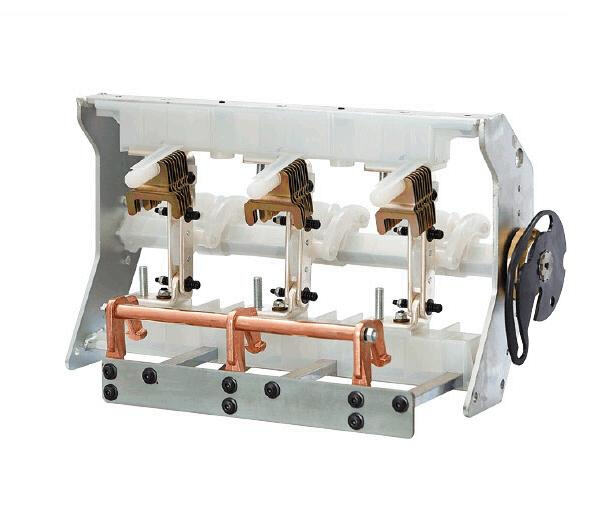
In power distribution systems, maintaining a stable output voltage is one of the most critical engineering challenges. Load conditions fluctuate constantly, grid supply voltages shift, and equipment sensitivity demands precision that passive transformer designs alone cannot always deliver. This is precisely where the tap changer becomes indispensable. By allowing deliberate adjustments to the transformer's turns ratio, a tap changer gives engineers and operators a practical, reliable mechanism for keeping voltage output within acceptable limits regardless of upstream or downstream variability.
Understanding the function of a tap changer in voltage regulation requires looking beyond the mechanical device itself and examining the broader role it plays in transformer design, grid stability, and industrial power quality. Whether installed in a distribution transformer serving a manufacturing facility or embedded in a high-voltage transmission transformer, the tap changer is the component that bridges the gap between what the grid delivers and what the load actually needs. This article explains how it works, why it matters, and what distinguishes the different types used across modern power systems.
The Core Function of a Tap Changer in a Transformer
Adjusting the Turns Ratio to Control Output Voltage
A transformer operates on the principle of electromagnetic induction, and its output voltage is directly proportional to the ratio of turns on the primary winding versus the secondary winding. When the input voltage rises or the load changes, the output voltage shifts accordingly. A tap changer addresses this by connecting to different points, or taps, along the winding, effectively changing the number of active turns and therefore altering the turns ratio.
By selecting a higher tap position, the effective number of primary turns increases, which reduces the secondary voltage. Conversely, selecting a lower tap position decreases the primary turns in circuit, raising the secondary voltage. This straightforward mechanical and electrical relationship gives the tap changer its voltage regulation capability without requiring any external power conditioning equipment.
In practical terms, a tap changer typically provides a regulation range of plus or minus five to ten percent of the rated voltage, with individual steps of one to two percent. This granularity allows fine-tuned control that keeps sensitive industrial and commercial loads operating within their specified voltage tolerances.
Compensating for System Voltage Variations
Power grids are not static environments. Voltage at the primary terminals of a distribution transformer can vary due to changes in generation output, transmission line loading, reactive power imbalances, and seasonal demand patterns. Without a tap changer, these variations pass directly through to the secondary side, potentially causing equipment malfunction, reduced motor efficiency, or premature insulation degradation.
The tap changer acts as a compensating mechanism. When the incoming supply voltage drops, the tap changer shifts to a position that reduces the effective primary turns, boosting the secondary voltage back toward its nominal value. When the supply voltage rises above nominal, the tap changer moves in the opposite direction to prevent overvoltage on the load side.
This compensation function is especially valuable in industrial facilities where voltage-sensitive processes such as precision machining, chemical processing, or data center operations cannot tolerate the kind of voltage swings that are common on distribution networks during peak demand periods.
On-Load Tap Changer Versus Off-Circuit Tap Changer
How an On-Load Tap Changer Operates Under Live Conditions
An on-load tap changer, often abbreviated as OLTC, is designed to change tap positions while the transformer remains energized and carrying load current. This is a technically demanding requirement because switching between taps while current is flowing creates a momentary short circuit between adjacent taps if not managed carefully. The OLTC uses a combination of transition resistors or reactors and a high-speed switching mechanism to transfer current from one tap to the next without interrupting supply or causing damaging arcing.
The switching sequence in a resistor-type OLTC involves briefly connecting both the current tap and the target tap simultaneously through a resistor, which limits the circulating current during the transition. The entire operation takes place in milliseconds, making it imperceptible to connected loads. This capability makes the on-load tap changer the preferred choice for transmission and large distribution transformers where continuous operation is non-negotiable.
Modern on-load tap changers are often paired with automatic voltage regulators, which monitor the secondary voltage continuously and send control signals to the tap changer motor drive to adjust position as needed. This closed-loop arrangement delivers fully automatic voltage regulation without operator intervention, which is essential for unmanned substations and remote installations.
The Role of the Off-Circuit Tap Changer in Fixed Adjustment Applications
An off-circuit tap changer, sometimes called a de-energized tap changer or DETC, can only be operated when the transformer is completely de-energized and isolated from the supply. It is a simpler and more robust device than the OLTC, consisting of a rotary or linear selector switch that physically connects to different winding taps. Because there is no need to manage live switching, the mechanical design is straightforward and highly reliable over decades of service.
The off-circuit tap changer is used in applications where the primary voltage is relatively stable and tap adjustments are only needed during commissioning, seasonal reconfiguration, or after significant changes to the local grid infrastructure. Distribution transformers serving stable industrial sites, rural feeders with predictable loading, and dedicated facility transformers are typical candidates for this type of tap changer.
While the off-circuit tap changer lacks the dynamic response of an OLTC, it offers advantages in cost, maintenance simplicity, and long-term reliability. For many applications, the ability to make periodic manual adjustments during planned outages is entirely sufficient for maintaining acceptable voltage regulation across the service life of the transformer.
Voltage Regulation Performance and Tap Changer Design Considerations
Tap Range, Step Size, and Regulation Accuracy
The voltage regulation performance of a transformer equipped with a tap changer depends heavily on the tap range and the number of steps available. A wider tap range provides greater flexibility to handle large supply voltage variations, while a finer step size improves the precision of voltage control. Engineers must balance these two parameters against the physical constraints of the winding design and the cost implications of additional tap positions.
Standard distribution transformers typically offer a tap range of plus or minus five percent with steps of two and a half percent, providing five tap positions in total. Higher-specification transformers used in industrial or utility applications may offer a range of plus or minus ten percent with steps of one or two percent, resulting in ten or more tap positions. Each additional tap position requires more winding connections, more insulation coordination, and a more complex tap changer mechanism.
The accuracy of voltage regulation also depends on the resolution of the voltage sensing circuit in automatic systems. A well-calibrated automatic voltage regulator working with a fine-step tap changer can maintain secondary voltage within one percent of the setpoint, which meets the requirements of most sensitive industrial and commercial loads.
Insulation and Thermal Considerations in Tap Changer Design
Because the tap changer operates within the transformer's oil-filled tank or in a separate oil-filled compartment, its design must account for the electrical stress and thermal environment it will experience throughout its service life. The contacts and switching elements must withstand repeated arcing in the case of on-load designs, and the insulating oil must be maintained in good condition to prevent dielectric breakdown.
Oil contamination from carbon particles generated during switching is one of the primary maintenance concerns for on-load tap changers. Most modern OLTC designs use a separate oil compartment that is isolated from the main transformer tank, preventing switching byproducts from contaminating the main insulating oil. Periodic oil sampling and contact inspection are standard maintenance practices that extend the service life of the tap changer and protect the transformer as a whole.
Thermal management is equally important. The tap changer contacts carry full load current, and any increase in contact resistance due to wear or contamination generates additional heat. Monitoring contact resistance during maintenance intervals helps identify wear before it progresses to a failure condition, which is particularly important in transformers that operate continuously at high load factors.
Automatic Voltage Regulation and the Tap Changer's Role in Modern Power Systems
Integration with Automatic Voltage Regulators
In modern distribution and industrial power systems, the tap changer rarely operates in isolation. It is typically integrated with an automatic voltage regulator, which continuously monitors the secondary bus voltage and compares it against a setpoint. When the measured voltage deviates beyond a defined bandwidth, the regulator issues a raise or lower command to the tap changer motor drive, which repositions the tap selector to bring the voltage back within range.
This automatic control loop transforms the tap changer from a passive adjustment device into an active voltage management tool. The regulator can be configured with time delays to prevent unnecessary tap operations during transient voltage dips, and with bandwidth settings that define how tightly the voltage is controlled. These parameters are tuned to match the characteristics of the connected load and the expected variability of the supply voltage.
Advanced automatic voltage regulators also incorporate features such as line drop compensation, which adjusts the voltage setpoint based on estimated voltage drop along the feeder, and parallel operation control, which coordinates tap changer movements across multiple transformers operating in parallel to prevent circulating reactive currents.
Tap Changer Performance in Distribution Transformers for Industrial Applications
For industrial facilities, the tap changer in a distribution transformer is often the first line of defense against power quality problems. Manufacturing processes that rely on variable speed drives, precision heating equipment, or sensitive instrumentation are particularly vulnerable to voltage variations. A properly configured tap changer keeps the supply voltage stable enough to prevent nuisance trips, production interruptions, and equipment damage.
Oil-filled distribution transformers with automatic tap changers are widely used in industrial substations because they combine high efficiency, robust thermal performance, and the voltage regulation capability needed to serve demanding loads. The oil insulation system provides excellent dielectric strength and effective heat dissipation, while the tap changer adds the dynamic voltage control that modern industrial processes require.
When specifying a distribution transformer for an industrial application, the tap changer specification should reflect the actual voltage variability expected at the installation site. Sites fed from long distribution feeders or located at the end of a radial network typically experience greater voltage variation and benefit from a wider tap range and automatic operation. Sites with stable grid connections may be adequately served by a simpler off-circuit tap changer with manual adjustment capability.
Maintenance, Reliability, and Service Life of Tap Changers
Routine Maintenance Practices for Long-Term Reliability
The tap changer is one of the most mechanically active components in a transformer, and its maintenance requirements reflect that activity. For on-load tap changers, routine maintenance typically includes oil sampling and analysis, contact inspection and replacement, drive mechanism lubrication, and functional testing of the motor drive and control circuits. The frequency of these activities depends on the number of tap operations performed, which is logged by an operation counter built into most modern tap changer designs.
Contact wear is the primary life-limiting factor for on-load tap changers. Manufacturers typically specify a contact replacement interval based on a defined number of operations, often in the range of fifty thousand to one hundred thousand operations depending on the design and the current being switched. Exceeding this interval without inspection increases the risk of contact failure, which can cause a transformer outage or, in severe cases, internal damage.
For off-circuit tap changers, maintenance is less intensive because there is no switching under load. However, the contacts should still be inspected periodically for corrosion or mechanical wear, and the position indicator should be verified to ensure accurate tap position reporting. Any sign of contact discoloration or pitting warrants closer inspection before the transformer is returned to service.
Condition Monitoring and Predictive Maintenance Approaches
Modern asset management practices increasingly rely on condition monitoring to extend maintenance intervals and reduce unplanned outages. For tap changers, condition monitoring typically involves dissolved gas analysis of the tap changer oil, which can detect arcing and overheating before they progress to visible damage. Acoustic monitoring and vibration analysis are also used to detect mechanical anomalies in the drive mechanism and switching assembly.
Some advanced transformer monitoring systems include dedicated tap changer monitoring modules that track motor drive current, operation time, and contact resistance in real time. Deviations from baseline values trigger alerts that allow maintenance teams to schedule intervention before a failure occurs. This predictive approach is particularly valuable for transformers in critical applications where an unplanned outage would have significant operational or financial consequences.
Investing in condition monitoring for tap changers is a cost-effective strategy for asset owners who operate large transformer fleets or who depend on specific transformers for continuous production. The data gathered over time also supports better capital planning decisions by providing objective evidence of remaining service life rather than relying solely on calendar-based replacement schedules.
FAQ
What is the primary function of a tap changer in a transformer?
The primary function of a tap changer is to adjust the transformer's turns ratio by connecting to different points along the winding. This adjustment changes the output voltage to compensate for variations in the supply voltage or load conditions, maintaining the secondary voltage within the required operating range. The tap changer is therefore the key mechanism through which a transformer performs active voltage regulation.
What is the difference between an on-load tap changer and an off-circuit tap changer?
An on-load tap changer can change tap positions while the transformer is energized and carrying load, using transition resistors or reactors to manage the switching current safely. An off-circuit tap changer can only be operated when the transformer is completely de-energized. The on-load type is used where continuous voltage regulation is required, while the off-circuit type is suitable for applications where periodic manual adjustment during planned outages is sufficient.
How does a tap changer contribute to power quality in industrial facilities?
In industrial facilities, a tap changer helps maintain stable supply voltage for sensitive equipment such as variable speed drives, precision machinery, and process control systems. By compensating for grid voltage variations and load-induced voltage drops, the tap changer reduces the risk of equipment malfunction, production interruptions, and premature component failure. When paired with an automatic voltage regulator, it provides continuous closed-loop voltage control without requiring operator intervention.
How often does a tap changer need maintenance?
Maintenance frequency for a tap changer depends on its type and the number of operations it performs. On-load tap changers typically require oil sampling and contact inspection at intervals defined by the manufacturer, often based on operation count rather than calendar time alone. Off-circuit tap changers require less frequent attention but should still be inspected periodically for contact condition and mechanical integrity. Condition monitoring techniques such as dissolved gas analysis can help optimize maintenance intervals and identify developing issues before they cause failures.
Table of Contents
- The Core Function of a Tap Changer in a Transformer
- On-Load Tap Changer Versus Off-Circuit Tap Changer
- Voltage Regulation Performance and Tap Changer Design Considerations
- Automatic Voltage Regulation and the Tap Changer's Role in Modern Power Systems
- Maintenance, Reliability, and Service Life of Tap Changers
- FAQ