
 EN
EN
In modern power distribution networks, the demand for reliable, space-efficient, and low-maintenance switching equipment has never been greater. A ring main unit has emerged as one of the most practical and technically sound solutions for medium-voltage distribution, particularly when integrated into compact substations. As urban infrastructure expands and industrial facilities demand tighter footprints without sacrificing performance, understanding the specific advantages of this equipment becomes essential for engineers, facility managers, and procurement decision-makers alike.
A ring main unit is a compact, factory-assembled switchgear device used to connect and control medium-voltage cable networks in a ring or radial configuration. When deployed inside compact substations, it delivers a combination of operational flexibility, safety, and spatial efficiency that traditional open-type switchgear simply cannot match. This article examines the core advantages of using a ring main unit in compact substation environments, covering everything from its structural benefits to its long-term operational value.
Understanding the Role of a Ring Main Unit in Compact Substations
What a Ring Main Unit Actually Does
A ring main unit serves as the primary switching and protection device within a medium-voltage distribution ring. It allows power to be fed from two directions, meaning that if one supply path fails, the network can automatically or manually switch to the alternative path without interrupting service. This looped topology is the foundation of reliable urban and industrial power distribution.
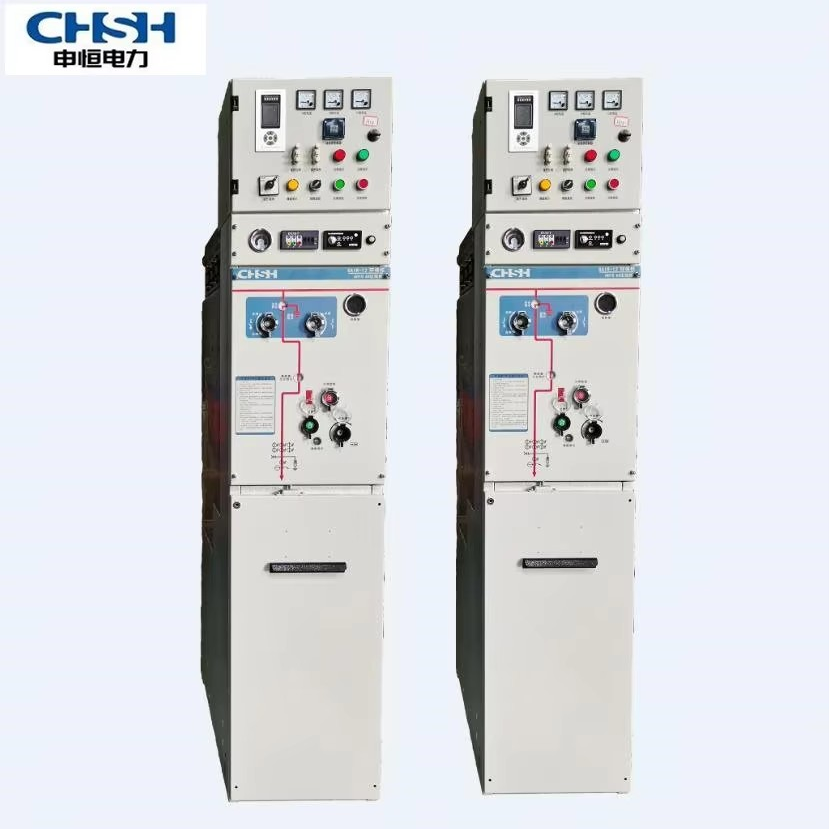
Inside a compact substation, the ring main unit typically handles incoming and outgoing feeder connections along with a transformer protection circuit. Its sealed, gas-insulated or solid-insulated design makes it inherently suitable for enclosed environments where space, safety, and environmental exposure are all critical concerns. The self-contained nature of the ring main unit means it arrives pre-tested and ready for installation, reducing on-site commissioning time significantly.
Because compact substations are often installed in densely populated areas, underground vaults, or industrial buildings, the ring main unit must perform reliably under varying environmental conditions. Its sealed construction directly addresses this requirement, offering protection against moisture, dust, and corrosive atmospheres without requiring additional enclosures or climate control systems.
Why Compact Substations Benefit from This Configuration
Compact substations are designed to consolidate medium-voltage switching, transformation, and low-voltage distribution into a single, integrated unit. Incorporating a ring main unit into this design allows the entire substation to maintain a minimal footprint while still supporting full ring network functionality. This integration eliminates the need for separate switchgear rooms or outdoor switching structures.
The modular architecture of a ring main unit aligns naturally with the prefabricated philosophy of compact substations. Both are engineered for rapid deployment, standardized interfaces, and minimal civil works. Together, they reduce project timelines and lower total installation costs, which is a significant advantage in time-sensitive infrastructure projects such as commercial developments, renewable energy installations, and urban grid upgrades.
Space Efficiency and Installation Advantages
Minimal Footprint Without Compromising Functionality
One of the most immediately apparent advantages of a ring main unit in a compact substation is its exceptionally small physical footprint. Traditional medium-voltage switchgear requires substantial floor space, dedicated rooms, and extensive busbars. A ring main unit consolidates all switching functions into a single, compact enclosure that can be installed in spaces where conventional equipment would simply not fit.
This space efficiency is particularly valuable in urban distribution networks where land costs are high and available space is limited. A ring main unit can be installed in underground chambers, building basements, or prefabricated kiosks without requiring structural modifications. The reduction in civil engineering requirements translates directly into lower project costs and faster deployment schedules.
Modern solid-insulated ring main unit designs take this further by eliminating the need for insulating gas maintenance, reducing the overall volume of the unit while maintaining full dielectric performance. This makes the ring main unit an even more attractive choice for compact substation applications where every cubic meter of space carries a cost.
Simplified Installation and Commissioning
A ring main unit is delivered as a fully factory-assembled and tested unit. This means that on-site installation is largely a matter of mechanical positioning, cable termination, and control wiring rather than complex assembly or calibration. For compact substations that are often installed in challenging locations, this simplicity is a genuine operational advantage.
Factory testing ensures that every ring main unit meets its rated performance specifications before it leaves the production facility. This eliminates a significant source of commissioning risk and reduces the likelihood of early-life failures. For project managers working to tight schedules, the predictability of a pre-tested ring main unit is a meaningful benefit that directly supports on-time energization.
Reliability and Supply Continuity
Ring Topology and Redundant Supply Paths
The defining operational advantage of a ring main unit is its ability to support ring network topology, which provides inherent supply redundancy. In a ring configuration, each load point is connected to two separate supply paths. If a fault occurs on one section of the ring, the ring main unit can isolate the affected segment and restore power through the alternative path, often within seconds.
This capability is critical for compact substations serving loads that cannot tolerate extended outages, such as hospitals, data centers, commercial complexes, and industrial facilities. The ring main unit enables network operators to achieve high levels of supply continuity without the cost and complexity of fully duplicated infrastructure. It is a cost-effective approach to resilience that is well-suited to the economics of medium-voltage distribution.
In automated distribution networks, the ring main unit can be equipped with remote control and automation interfaces that allow fault isolation and supply restoration to occur without manual intervention. This further reduces outage duration and minimizes the operational burden on network maintenance teams, which is a significant advantage as utilities and industrial operators seek to reduce staffing costs while maintaining service quality.
Sealed Design and Long-Term Operational Reliability
The sealed construction of a modern ring main unit is a major contributor to its long-term reliability. By enclosing all live parts within a hermetically sealed or solid-insulated enclosure, the ring main unit eliminates the primary causes of insulation degradation: moisture ingress, contamination, and oxidation. This is especially important in compact substations installed in coastal, industrial, or high-humidity environments.
Solid-insulated ring main unit designs use cast resin or epoxy to encapsulate the switching components, providing excellent dielectric strength without relying on gas pressure maintenance. This removes a common maintenance requirement associated with gas-insulated switchgear and reduces the risk of insulation failure due to gas leakage over time. The result is a ring main unit that maintains its performance characteristics throughout its service life with minimal intervention.
The mechanical simplicity of the ring main unit also contributes to reliability. With fewer moving parts and no external busbars or exposed connections, the probability of mechanical failure or accidental contact is substantially reduced. This makes the ring main unit a particularly safe and dependable choice for unmanned compact substation installations.
Safety Features and Maintenance Advantages
Inherent Safety Through Sealed Construction
Safety is a primary design criterion for any medium-voltage switching equipment, and the ring main unit addresses this through its sealed, arc-resistant construction. All live components are enclosed within the unit's housing, preventing accidental contact during normal operation and maintenance activities. This is a critical safety advantage in compact substations where working space is limited and personnel may be in close proximity to energized equipment.
Many ring main unit designs incorporate internal arc fault containment features that direct arc energy away from personnel and prevent enclosure rupture in the event of an internal fault. Combined with interlocking mechanisms that prevent unsafe switching sequences, the ring main unit provides a high level of inherent safety that reduces reliance on procedural controls alone.
The absence of exposed busbars and the use of fully insulated cable terminations further reduce the risk of accidental flashover during cable connection or maintenance work. For compact substations installed in public areas or accessible locations, this level of passive safety protection is not just desirable but often a regulatory requirement.
Low Maintenance Requirements and Lifecycle Cost
A ring main unit is designed for minimal maintenance over its operational life. The sealed construction eliminates the need for periodic cleaning of insulation surfaces, inspection of exposed contacts, or gas pressure monitoring. Routine maintenance is typically limited to visual inspection, functional testing of switching mechanisms, and verification of protection relay settings.
This low maintenance profile translates directly into reduced lifecycle costs. For operators managing large numbers of compact substations across a distribution network, the cumulative saving in maintenance labor, access equipment, and outage coordination is substantial. The ring main unit's reliability also reduces the frequency of unplanned maintenance interventions, which are typically far more costly than scheduled activities.
The extended service life of a well-designed ring main unit, often exceeding 30 years with minimal intervention, means that the initial capital investment is spread over a long operational period. When evaluated on a total cost of ownership basis, the ring main unit consistently demonstrates strong economic performance compared to alternative switching solutions that require more frequent maintenance or earlier replacement.
Flexibility and Scalability in Network Design
Modular Configuration Options
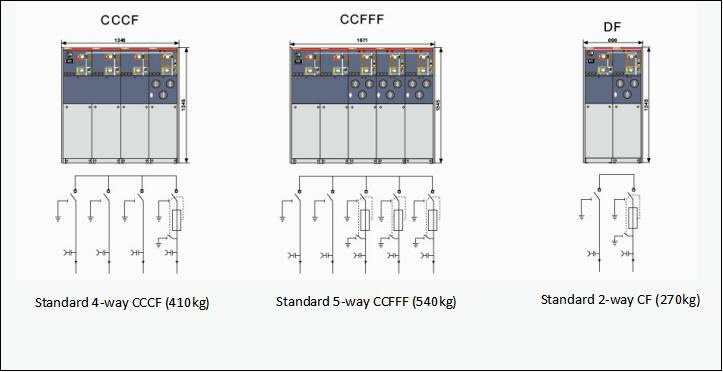
A ring main unit is available in a range of configurations, typically combining load break switches, fuse protection, and circuit breaker functions within a single enclosure. This modularity allows network designers to specify a ring main unit that precisely matches the functional requirements of each compact substation without over-engineering or unnecessary cost.
Standard configurations include two-way, three-way, and four-way arrangements that can accommodate different numbers of incoming and outgoing feeders. As network requirements evolve, additional functional units can often be added to an existing ring main unit installation, providing a degree of future-proofing that is difficult to achieve with fixed-configuration switchgear.
This configurability makes the ring main unit suitable for a wide range of compact substation applications, from simple radial distribution points to complex ring network nodes serving multiple loads. The ability to standardize on a single equipment platform across different network configurations simplifies procurement, spares management, and operator training.
Integration with Smart Grid and Automation Systems
Modern ring main unit designs are engineered to support integration with distribution automation systems, remote terminal units, and smart grid communication protocols. This allows the ring main unit to participate in automated fault location, isolation, and supply restoration schemes that significantly improve network performance and reduce outage impact.
Remote monitoring capabilities enable operators to track the status of each ring main unit in real time, receive alarms for abnormal conditions, and execute switching operations from a central control room without dispatching field personnel. For compact substations in remote or difficult-to-access locations, this remote operability is a major practical advantage that reduces both operational cost and response time.
As distribution networks increasingly incorporate distributed generation, electric vehicle charging infrastructure, and variable loads, the ability of the ring main unit to support flexible network reconfiguration becomes even more valuable. Its compatibility with modern protection and automation systems positions the ring main unit as a foundational component of future-ready compact substation designs.
FAQ
What is the primary function of a ring main unit in a compact substation?
A ring main unit provides medium-voltage switching, protection, and network connectivity within a compact substation. It connects the substation to a distribution ring, enabling power to be supplied from two directions and allowing faulty sections to be isolated without interrupting supply to healthy parts of the network. This makes the ring main unit essential for maintaining supply continuity in modern distribution systems.
How does a solid-insulated ring main unit differ from a gas-insulated version?
A solid-insulated ring main unit uses cast resin or epoxy to encapsulate its switching components, eliminating the need for insulating gas. This removes the requirement for gas pressure monitoring and maintenance, reduces the risk of insulation failure due to gas leakage, and simplifies the overall maintenance regime. Gas-insulated designs use sulfur hexafluoride or alternative gases to provide dielectric insulation, which requires periodic pressure checks and careful handling due to environmental considerations.
Can a ring main unit be used in outdoor compact substation installations?
Yes, a ring main unit is well-suited to outdoor compact substation installations. Its sealed construction provides inherent protection against moisture, dust, and environmental contaminants, making it suitable for deployment in outdoor kiosks, underground chambers, and exposed industrial environments. The degree of environmental protection is defined by the unit's IP rating, and most modern ring main unit designs achieve ratings suitable for outdoor use without additional protective enclosures.
What maintenance does a ring main unit typically require over its service life?
A ring main unit is designed for minimal maintenance. Routine activities typically include periodic visual inspection of the enclosure and cable terminations, functional testing of switching mechanisms and interlocks, and verification of protection relay settings. The sealed construction eliminates the need for internal cleaning or contact inspection. Maintenance intervals are generally longer than those required for open-type switchgear, and many operators schedule ring main unit inspections on a three-to-five-year cycle depending on the operating environment and network criticality.
Table of Contents
- Understanding the Role of a Ring Main Unit in Compact Substations
- Space Efficiency and Installation Advantages
- Reliability and Supply Continuity
- Safety Features and Maintenance Advantages
- Flexibility and Scalability in Network Design
-
FAQ
- What is the primary function of a ring main unit in a compact substation?
- How does a solid-insulated ring main unit differ from a gas-insulated version?
- Can a ring main unit be used in outdoor compact substation installations?
- What maintenance does a ring main unit typically require over its service life?