
 EN
EN
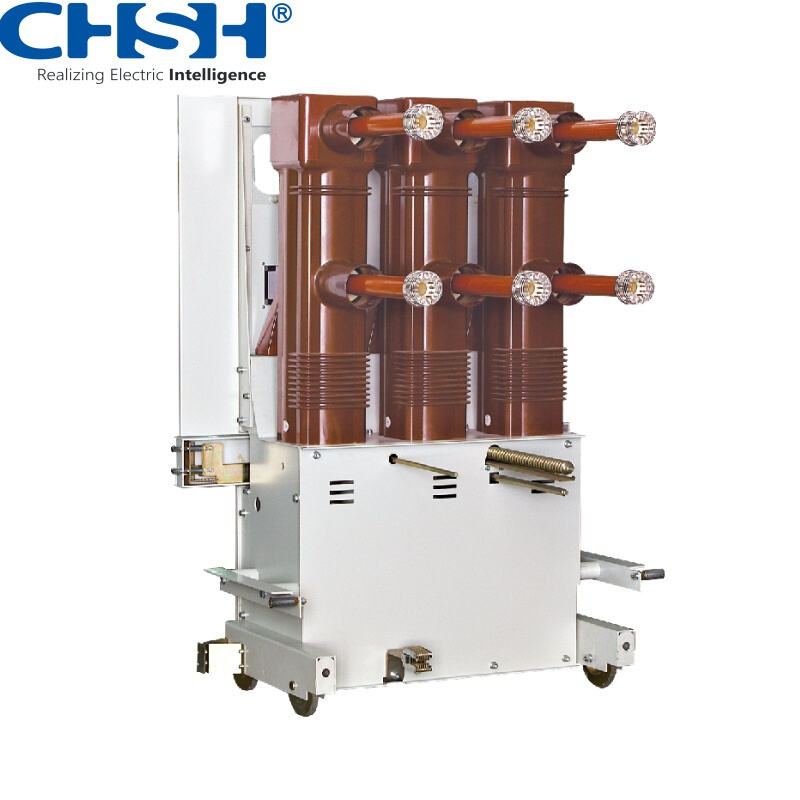
Power system reliability depends heavily on the ability to isolate faults quickly and prevent them from spreading throughout the electrical network. A circuit breaker serves as the primary protective device that interrupts electrical current when abnormal conditions occur, acting as the first line of defense against cascading failures that could devastate entire power grids. Understanding how these critical components function and their role in maintaining system stability is essential for electrical engineers and power system operators.

Understanding Circuit Breaker Fundamentals
Basic Operating Principles
A circuit breaker operates by detecting abnormal electrical conditions and mechanically separating electrical contacts to interrupt current flow. The device continuously monitors electrical parameters such as current magnitude, voltage levels, and frequency variations. When predetermined thresholds are exceeded, protective relays signal the circuit breaker to open, creating an air gap or vacuum that prevents current from continuing to flow through the faulted circuit.
The interruption process involves extinguishing the electrical arc that forms when contacts separate under load conditions. Modern circuit breaker designs employ various arc extinction methods including air blast, oil immersion, sulfur hexafluoride gas, and vacuum technologies. Each method provides specific advantages depending on voltage levels, current ratings, and environmental considerations that influence system design requirements.
Protection Coordination Systems
Effective fault protection requires careful coordination between multiple circuit breaker installations throughout the power system network. Protection engineers establish time-current characteristic curves that ensure the circuit breaker closest to a fault operates first, while upstream devices remain closed to maintain power supply to unaffected areas. This selective coordination prevents unnecessary outages and maintains maximum system availability during fault conditions.
Backup protection schemes provide redundancy when primary circuit breaker protection fails to operate correctly. Secondary protection systems typically include longer time delays to allow primary devices to clear faults first, but will initiate breaker operation if primary protection malfunctions. This layered approach ensures that faults are always cleared, even when individual protection components experience failures or maintenance issues.
Cascading Fault Prevention Mechanisms
Fault Detection and Isolation
The primary function of a circuit breaker in preventing cascading faults involves rapid detection and isolation of abnormal system conditions before they can propagate to adjacent network sections. Modern protective relay systems can detect fault conditions within milliseconds and initiate circuit breaker operation to isolate the affected area. This quick response time is critical because power system faults can spread rapidly through interconnected networks, potentially causing widespread blackouts.
Overcurrent protection represents the most fundamental circuit breaker function, detecting when current levels exceed safe operating limits due to short circuits, ground faults, or equipment failures. The device must distinguish between temporary overcurrent conditions that may clear naturally and persistent faults requiring immediate isolation. Advanced relay systems incorporate directional elements, impedance measurements, and differential protection to enhance fault detection accuracy and prevent false operations.
System Stability Preservation
Beyond fault isolation, circuit breaker operation plays a crucial role in maintaining overall power system stability during disturbances. When generators lose synchronism or transmission lines become overloaded, strategic circuit breaker operations can preserve system integrity by separating unstable areas from the main network. This controlled islanding prevents voltage collapse and frequency excursions that could lead to complete system shutdown.
Load shedding schemes work in conjunction with circuit breaker systems to maintain supply-demand balance when generation capacity becomes insufficient. Automatic under-frequency load shedding programs use circuit breaker operations to disconnect predetermined loads when system frequency drops below acceptable levels. This coordinated response prevents cascading generator trips that could result in complete blackout conditions across large geographical areas.
Advanced Protection Technologies
Digital Relay Integration
Modern circuit breaker protection systems incorporate sophisticated digital relay technologies that provide enhanced fault detection capabilities and improved coordination with other system protection elements. These intelligent devices can communicate with supervisory control and data acquisition systems to provide real-time status information and enable remote control operations. Digital relays also offer comprehensive event recording and fault analysis capabilities that help engineers identify system weaknesses and improve protection schemes.
Microprocessor-based protection systems can implement complex protection algorithms that consider multiple electrical parameters simultaneously. These advanced systems provide better discrimination between normal operating conditions and actual fault situations, reducing the likelihood of unnecessary circuit breaker operations that could destabilize the power system. The enhanced sensitivity and selectivity of digital protection improve overall system reliability while maintaining adequate protection coverage.
Communication and Coordination
Wide-area protection schemes utilize high-speed communication networks to coordinate circuit breaker operations across large geographical areas. These systems can detect system-wide disturbances and implement coordinated protection responses that prevent cascading failures from propagating between interconnected utilities. Synchronized measurements from multiple locations provide comprehensive system visibility that enables more intelligent protection decisions.
Adaptive protection technologies allow circuit breaker protection settings to change automatically based on real-time system conditions. During heavy loading or emergency operating conditions, protection schemes can adjust their sensitivity and timing to provide appropriate protection while maximizing system utilization. This flexibility helps maintain reliable operation during stressed system conditions that might otherwise lead to cascading outages.
Circuit Breaker Types and Applications
Voltage Level Classifications
Circuit breaker design and construction vary significantly based on the voltage levels and current ratings required for specific applications. Low-voltage circuit breaker systems typically serve distribution networks and commercial facilities, providing protection for circuits operating below 1000 volts. These devices often incorporate thermal-magnetic trip units that respond to both overcurrent and overtemperature conditions, providing comprehensive protection for electrical equipment and conductors.
Medium-voltage circuit breaker installations protect distribution feeders, industrial facilities, and transmission substations operating between 1 kV and 69 kV. These applications require more sophisticated arc interruption technologies and often include vacuum or gas-insulated switching mechanisms. The protection schemes for medium-voltage applications typically incorporate microprocessor-based relays with multiple protection functions and communication capabilities.
High-Voltage Transmission Protection
High-voltage transmission circuit breaker systems represent the most critical protection components in preventing cascading power system failures. Operating at voltages above 69 kV, these devices must interrupt enormous fault currents while maintaining system stability during switching operations. Sulfur hexafluoride gas and vacuum technologies dominate high-voltage applications due to their superior arc interruption capabilities and environmental considerations.
Transmission circuit breaker protection schemes incorporate multiple protection zones with overlapping coverage to ensure complete fault detection throughout the protected area. Distance protection, differential protection, and pilot protection schemes work together to provide fast, selective fault clearing that prevents damage to expensive transmission equipment while maintaining maximum system availability for continued power delivery.
Maintenance and Testing Requirements
Preventive Maintenance Programs
Regular maintenance of circuit breaker systems is essential for ensuring reliable operation when protection is needed most. Preventive maintenance programs include periodic inspection of mechanical components, contact systems, and arc interruption media to identify potential problems before they can compromise protection performance. Proper maintenance scheduling helps prevent circuit breaker failures that could result in delayed fault clearing and increased risk of cascading outages.
Contact resistance measurements, insulation testing, and mechanical operation checks verify that circuit breaker components remain within acceptable operating parameters. Arc interruption media such as sulfur hexafluoride gas requires periodic testing and replacement to maintain proper interruption capability. Control circuit testing ensures that protection signals can reliably initiate circuit breaker operation when fault conditions occur.
Performance Testing and Verification
Comprehensive testing programs verify circuit breaker performance under various operating conditions and confirm that protection coordination remains effective as system configurations change. Primary injection testing validates that protection relays and circuit breaker systems respond correctly to fault conditions, while secondary injection testing checks relay logic and timing without energizing primary circuits.
Timing tests measure circuit breaker operating speeds to ensure compliance with protection coordination requirements and verify that fault interruption occurs within specified time limits. Contact travel measurements and velocity analysis help identify mechanical problems that could affect interruption performance or reduce circuit breaker operating life. Regular testing provides confidence that protection systems will operate correctly when needed to prevent cascading failures.
FAQ
How quickly must a circuit breaker operate to prevent cascading faults
Circuit breaker operating times for fault prevention typically range from 50 to 200 milliseconds, depending on the voltage level and system requirements. High-voltage transmission applications often require faster operation, with some systems operating in 2-3 cycles (33-50 milliseconds) to maintain system stability. The specific timing requirements depend on protection coordination studies and system stability analysis that determine acceptable fault clearing times for each application.
What happens if a circuit breaker fails to operate during a fault
When a circuit breaker fails to operate, backup protection systems initiate operation of upstream circuit breaker devices to clear the fault. This backup protection typically includes longer time delays to allow primary protection to operate first, but will eventually clear the fault even if primary devices fail. However, backup operation affects a larger portion of the system, potentially causing unnecessary outages that primary protection would have prevented.
Can modern circuit breaker systems prevent all cascading failures
While modern circuit breaker protection systems are highly effective at preventing most cascading failures, they cannot eliminate all possibilities of widespread outages. Extreme events such as multiple simultaneous faults, cyberattacks, or severe weather conditions can overwhelm protection systems or cause failures that exceed design capabilities. However, properly designed and maintained circuit breaker systems significantly reduce the probability and severity of cascading outages.
How do circuit breaker protection settings affect system reliability
Circuit breaker protection settings must balance sensitivity for fault detection with security against false operations. Settings that are too sensitive may cause unnecessary trips during normal system disturbances, while settings that are too conservative may allow faults to persist and potentially cause cascading failures. Protection engineers use detailed system studies and coordination analysis to optimize settings that provide reliable protection while maintaining maximum system availability and preventing unwanted outages.