
 EN
EN
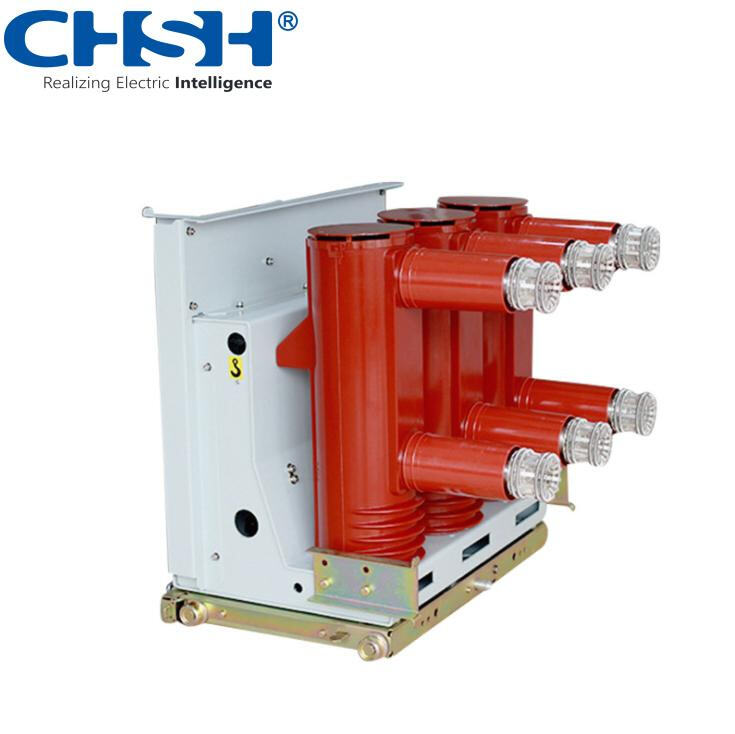
Electrical utilities worldwide face the critical challenge of safely interrupting high voltage circuits while minimizing arc energy and protecting valuable equipment. The vacuum circuit breaker has emerged as a revolutionary solution that dramatically reduces arc energy compared to traditional oil or air-filled circuit breakers. This advanced technology leverages the unique properties of vacuum to create an environment where electrical arcs are quickly extinguished, resulting in superior performance and enhanced safety in utility applications.
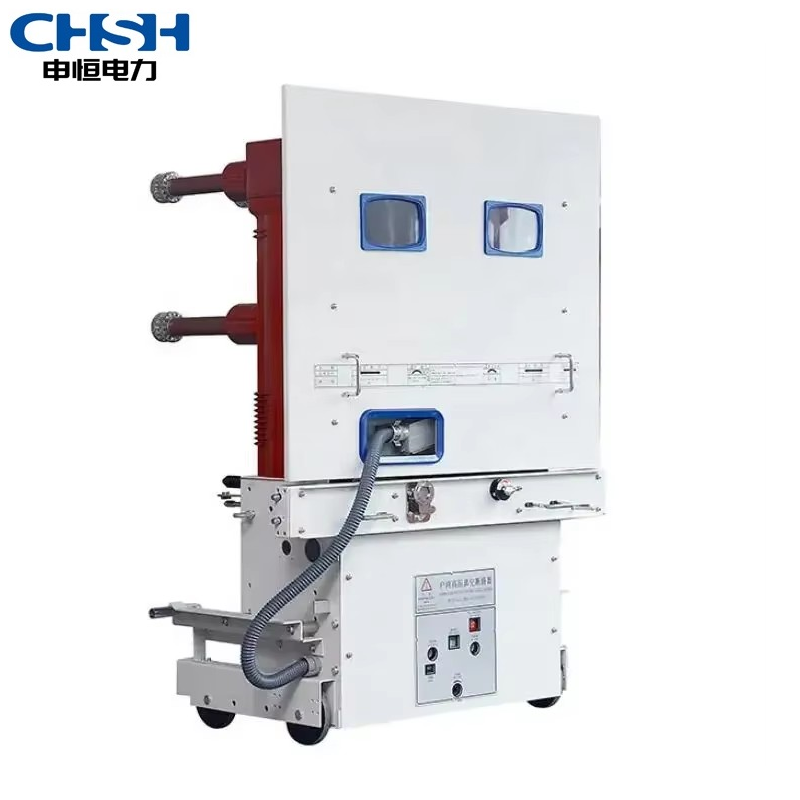
The Science Behind Vacuum Arc Extinction
Vacuum Environment Properties
A vacuum circuit breaker operates within a sealed chamber where air pressure is reduced to approximately 10^-4 torr, creating an environment with minimal gas molecules. This near-perfect vacuum state fundamentally changes how electrical arcs behave when contacts separate. Unlike air or oil-filled breakers where arc-sustaining gases are abundant, the vacuum environment lacks sufficient particles to maintain a continuous arc path, leading to rapid arc extinction.
The absence of oxygen and other gases in the vacuum chamber prevents oxidation and contamination of the contact surfaces. This pristine environment ensures consistent performance over thousands of switching operations. The vacuum circuit breaker maintains its arc-interrupting capabilities throughout its operational life without degradation from chemical reactions or particle accumulation that plague other breaker technologies.
Arc Formation and Collapse Mechanism
When contacts in a vacuum circuit breaker begin to separate under fault conditions, an arc initially forms due to metal vapor created by contact erosion. However, this arc behaves differently than in gas-filled environments. The metallic vapor quickly diffuses into the surrounding vacuum, removing the conductive medium necessary for arc maintenance. This process occurs within microseconds, dramatically reducing the total arc energy released.
The rapid cooling effect of the vacuum environment accelerates arc extinction. As the metallic vapor expands into the vacuum space, it undergoes adiabatic cooling, causing the plasma temperature to drop rapidly. This temperature reduction decreases the ionization level of the vapor, further weakening the arc until it can no longer sustain itself. The result is a clean, fast interruption with minimal energy release.
Arc Energy Reduction Mechanisms
Minimal Arc Duration
The most significant advantage of a vacuum circuit breaker in reducing arc energy lies in its extremely short arc duration. Traditional air circuit breakers may maintain arcs for several cycles, while a vacuum circuit breaker typically extinguishes arcs within the first current zero crossing. This dramatic reduction in arc time directly translates to lower total energy release, as arc energy is proportional to both current magnitude and duration.
Laboratory tests consistently demonstrate that vacuum circuit breakers achieve arc extinction in 0.5 to 2 milliseconds under typical utility fault conditions. This rapid interruption prevents the arc from reaching its full energy potential, protecting downstream equipment and reducing thermal stress on the breaker itself. The consistent short arc duration also makes system protection coordination more predictable and reliable.
Low Arc Voltage Characteristics
Vacuum circuit breakers maintain relatively low arc voltages during the interruption process compared to other technologies. The arc voltage in a vacuum environment typically ranges from 20 to 50 volts, significantly lower than the hundreds of volts seen in air circuit breakers. This low voltage characteristic reduces the power dissipated in the arc, directly contributing to lower overall arc energy.
The stable, low arc voltage also prevents voltage escalation that can occur in gas-filled breakers when arc products accumulate. This stability ensures that the vacuum circuit breaker maintains consistent performance characteristics throughout its operational life, providing reliable arc energy reduction across thousands of switching operations.
Utility Application Benefits
Equipment Protection Enhancement
The reduced arc energy produced by vacuum circuit breakers translates directly into enhanced protection for utility equipment. Transformers, generators, and other valuable assets experience less thermal and mechanical stress during fault clearing operations. This protection extends equipment life and reduces maintenance costs, making vacuum circuit breaker technology economically attractive for utility operators.
Switchgear installations benefit significantly from the lower arc energy characteristics of vacuum circuit breakers. The reduced energy release minimizes the risk of switchgear damage during fault events, allowing for more compact designs and reduced spacing requirements. This advantage is particularly valuable in urban substations where space is at a premium and equipment density is high.
System Reliability Improvements
Vacuum circuit breaker technology contributes to improved overall system reliability through consistent, predictable switching performance. The inherent arc energy reduction capabilities ensure that fault clearing operations occur reliably without the variability associated with gas-filled or oil circuit breakers. This consistency allows system operators to optimize protection settings and coordination schemes with greater confidence.
The maintenance advantages of vacuum circuit breakers further enhance system reliability. Unlike oil circuit breakers that require regular oil testing and replacement, or air circuit breakers that need compressed air system maintenance, vacuum circuit breakers operate maintenance-free for extended periods. This reduced maintenance burden allows utility personnel to focus on other critical system components while maintaining high reliability standards.
Comparative Performance Analysis
Traditional Circuit Breaker Limitations
Oil circuit breakers, once the standard for high voltage applications, suffer from several arc energy-related disadvantages compared to vacuum circuit breakers. Oil degradation over time leads to increased arc energy and unpredictable switching behavior. Carbon formation from oil decomposition can create conductive paths that interfere with proper arc extinction, leading to higher energy release and potential equipment damage.
Air circuit breakers face similar challenges with arc energy control, particularly in high current applications. The presence of air and moisture can lead to extended arc duration and higher arc voltages. SF6 gas circuit breakers, while effective, present environmental concerns and require complex gas monitoring systems. The vacuum circuit breaker eliminates these issues while providing superior arc energy reduction performance.
Quantitative Energy Reduction Measurements
Field measurements and laboratory studies consistently show that vacuum circuit breakers reduce arc energy by 60-80% compared to equivalent air circuit breakers. For a typical 15kV, 1200A vacuum circuit breaker interrupting a 25kA fault current, the total arc energy is typically less than 50 kilojoules, compared to 200-300 kilojoules for comparable air circuit breakers.
These energy reduction benefits become more pronounced at higher current levels. A vacuum circuit breaker rated for 40kA interruption may release only 150-200 kilojoules of arc energy, while traditional technologies could release 800-1200 kilojoules under similar conditions. This dramatic difference has significant implications for equipment protection and system design considerations in utility applications.
Installation and Operational Considerations
Environmental Advantages
The environmental benefits of vacuum circuit breaker technology extend beyond arc energy reduction. Unlike SF6 gas circuit breakers that contribute to greenhouse gas emissions, vacuum circuit breakers use no environmentally harmful gases. The sealed vacuum environment prevents the release of any switching byproducts, making this technology environmentally friendly throughout its operational life.
Vacuum circuit breakers also eliminate the fire and explosion risks associated with oil circuit breakers. The absence of flammable materials makes these devices inherently safer for indoor installations and reduces insurance costs. This safety advantage is particularly important in densely populated urban areas where utility substations must operate near residential and commercial buildings.
Maintenance and Lifecycle Cost Benefits
The reduced arc energy characteristics of vacuum circuit breakers contribute to lower lifecycle costs through reduced maintenance requirements and extended equipment life. Contact erosion, a primary maintenance concern in circuit breakers, is minimized due to the controlled arc environment and shorter arc duration. Many vacuum circuit breakers can operate for 10,000 to 30,000 switching operations without contact replacement.
The sealed vacuum environment protects internal components from environmental contamination, moisture, and oxidation. This protection extends the operational life of the vacuum circuit breaker and maintains consistent arc energy reduction performance over decades of service. Utility operators report significant cost savings in maintenance personnel time and replacement parts compared to traditional circuit breaker technologies.
Future Developments and Innovations
Advanced Contact Materials
Ongoing research in vacuum circuit breaker technology focuses on developing advanced contact materials that further reduce arc energy and extend equipment life. Copper-chromium alloys and other specialized materials show promise for reducing contact erosion while maintaining excellent arc extinction properties. These materials could push arc energy reduction even further below current levels.
Nanotechnology applications in contact surface engineering may revolutionize vacuum circuit breaker performance. Research into nanostructured contact surfaces suggests potential for even faster arc extinction and lower energy release. These developments could make vacuum circuit breakers the definitive choice for all utility switching applications, regardless of voltage or current rating.
Smart Monitoring Integration
The integration of smart monitoring systems with vacuum circuit breaker technology offers opportunities for real-time arc energy measurement and analysis. Advanced sensors can monitor contact wear, vacuum level, and switching performance, providing utility operators with detailed information about arc energy trends and equipment condition. This data enables predictive maintenance strategies that optimize both equipment life and arc energy performance.
Digital communication capabilities allow vacuum circuit breakers to report switching events, arc energy measurements, and performance metrics to central control systems. This integration supports grid modernization efforts and enables more sophisticated protection and control schemes. The combination of inherently low arc energy and intelligent monitoring creates a powerful platform for next-generation utility applications.
FAQ
What makes vacuum circuit breakers more effective at reducing arc energy than other types
Vacuum circuit breakers are more effective at reducing arc energy because they operate in a near-perfect vacuum environment that lacks the gas molecules necessary to sustain electrical arcs. When contacts separate, any arc that forms quickly extinguishes due to the absence of conductive medium, resulting in arc durations of only 0.5-2 milliseconds compared to several cycles in traditional breakers. This dramatic reduction in arc time directly translates to 60-80% lower arc energy release.
How does the vacuum environment contribute to arc extinction speed
The vacuum environment accelerates arc extinction through several mechanisms. First, the metallic vapor created during contact separation rapidly diffuses into the surrounding vacuum, removing the conductive path. Second, the adiabatic expansion of vapor into the vacuum space causes rapid cooling, reducing plasma temperature and ionization levels. Finally, the absence of gas molecules prevents arc re-ignition, ensuring clean interruption at the first current zero crossing.
What are the long-term reliability benefits of reduced arc energy in utility applications
Reduced arc energy from vacuum circuit breakers provides several long-term reliability benefits including extended contact life due to minimal erosion, consistent switching performance over thousands of operations, reduced thermal stress on surrounding equipment, and lower maintenance requirements. These factors contribute to improved system uptime, predictable protection coordination, and reduced lifecycle costs for utility operators while maintaining superior equipment protection capabilities.
Are there any limitations to vacuum circuit breaker arc energy reduction capabilities
While vacuum circuit breakers excel at arc energy reduction, they do have some limitations. Very high current interruption capabilities may require larger vacuum chambers, and the technology is typically more cost-effective for medium voltage applications rather than transmission level voltages. Additionally, the vacuum integrity must be maintained throughout the device lifetime, requiring quality sealing systems. However, these limitations are generally outweighed by the significant arc energy reduction benefits in most utility applications.
Table of Contents
- The Science Behind Vacuum Arc Extinction
- Arc Energy Reduction Mechanisms
- Utility Application Benefits
- Comparative Performance Analysis
- Installation and Operational Considerations
- Future Developments and Innovations
-
FAQ
- What makes vacuum circuit breakers more effective at reducing arc energy than other types
- How does the vacuum environment contribute to arc extinction speed
- What are the long-term reliability benefits of reduced arc energy in utility applications
- Are there any limitations to vacuum circuit breaker arc energy reduction capabilities