
 EN
EN
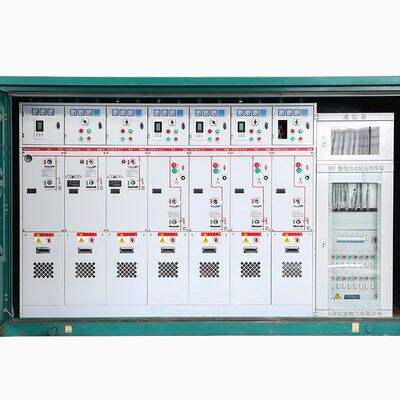
When engineers and procurement specialists evaluate medium-voltage switching equipment, one of the most consequential decisions they face is choosing between vacuum and SF6 circuit breakers. Both technologies have earned their place in modern power distribution systems, yet they differ substantially in their arc-quenching mechanisms, environmental profiles, maintenance demands, and suitability across various operating conditions. Understanding these distinctions is not merely an academic exercise — it directly shapes the reliability, safety, and long-term cost of any electrical installation.
The comparison between vacuum and SF6 circuit breakers has grown more relevant as industries push toward greener infrastructure, stricter safety standards, and higher operational efficiency. SF6-based equipment has dominated switchgear applications for decades, but vacuum technology has steadily advanced to challenge that dominance in many segments. This article examines the core technical, environmental, and operational differences between these two breaker types so that decision-makers can align their equipment choices with both engineering requirements and broader organizational goals.
Arc-Quenching Technology: The Fundamental Difference
How Vacuum Circuit Breakers Extinguish Arcs
In vacuum circuit breakers, the interrupting process takes place inside a sealed vacuum interrupter bottle where the pressure is maintained at approximately 10⁻³ Pa or lower. When the contacts separate under load, an arc forms from metallic vapor emitted by the contact surfaces themselves. Because there is virtually no gas medium to sustain ionization, the arc extinguishes rapidly at the first natural current zero crossing. This self-limiting behavior is one of the defining strengths of vacuum technology.
The vacuum interrupter is a hermetically sealed unit, which means the arc-quenching environment is entirely self-contained and does not degrade over time under normal operating conditions. This design eliminates the need for any external gas management system, simplifying the overall switchgear assembly. For facilities that prioritize compact, low-maintenance installations, this characteristic makes vacuum and SF6 circuit breakers a meaningful comparison point when evaluating total system complexity.
One important consideration with vacuum interrupters is the phenomenon known as voltage escalation or current chopping, which can generate transient overvoltages when interrupting low inductive currents. Proper surge protection coordination is therefore essential in vacuum-based installations, particularly when protecting motors or transformers with sensitive insulation systems.
How SF6 Circuit Breakers Extinguish Arcs
SF6 circuit breakers rely on sulfur hexafluoride gas as both the arc-quenching medium and the primary insulating medium. SF6 has exceptional dielectric strength — approximately 2.5 times that of air at the same pressure — and outstanding arc-quenching properties due to its high electronegativity, which allows it to rapidly absorb free electrons and de-ionize the arc plasma. When contacts separate, a blast of SF6 gas is directed across the arc, cooling it and restoring dielectric strength almost immediately after current zero.
This mechanism makes SF6 breakers particularly effective at interrupting high fault currents and performing reliably across a wide range of operating voltages, including transmission-level applications well above the medium-voltage range. The gas pressure within the breaker chamber is carefully controlled, and monitoring systems are typically integrated to detect any leakage that could compromise interrupting performance. When comparing vacuum and SF6 circuit breakers on raw interrupting capability at higher voltage levels, SF6 has historically held an advantage.
However, the arc-quenching byproducts of SF6 decomposition — including sulfur fluorides and metal fluorides — are toxic and corrosive. Handling these byproducts during maintenance requires specialized personal protective equipment and disposal procedures, adding a layer of operational complexity that vacuum technology avoids entirely.
Environmental and Regulatory Considerations
The SF6 Greenhouse Gas Problem
SF6 is classified as one of the most potent greenhouse gases known, with a global warming potential approximately 23,500 times that of CO₂ over a 100-year horizon. Even small leaks from SF6-insulated equipment can contribute meaningfully to an organization's carbon footprint. Regulatory bodies in the European Union, North America, and increasingly across Asia-Pacific have introduced or are actively developing restrictions on SF6 use in new electrical equipment, particularly in distribution-level applications where vacuum technology is a viable alternative.
This regulatory trajectory is reshaping procurement decisions across utilities, industrial facilities, and commercial real estate operators. Organizations with sustainability commitments or those operating under emissions reporting frameworks are under growing pressure to phase out SF6 equipment where technically feasible. In this context, the environmental difference between vacuum and SF6 circuit breakers has become a strategic consideration, not just a technical one.
Some manufacturers have introduced alternative gas mixtures — such as g³ (green gas for grid) or clean air solutions — as transitional replacements for pure SF6. These alternatives reduce the global warming potential significantly but may require different handling procedures and are not yet universally standardized across the industry.
Vacuum Technology's Environmental Advantage
Vacuum circuit breakers contain no greenhouse gases and produce no toxic arc byproducts under normal operation. The sealed interrupter bottle requires no gas refilling, no leak monitoring infrastructure, and no specialized disposal protocols for gaseous byproducts. This makes vacuum-based switchgear inherently more aligned with environmental compliance requirements and corporate sustainability targets.
From a lifecycle perspective, vacuum interrupters are designed to withstand a defined number of fault interruptions and mechanical operations before replacement is needed. When the interrupter does reach end of life, it is replaced as a complete sealed unit, which simplifies maintenance logistics and reduces the risk of technician exposure to hazardous materials. The contrast between vacuum and SF6 circuit breakers on this dimension is particularly stark for organizations managing large fleets of switchgear across multiple sites.
Voltage Range and Application Suitability
Where Vacuum Circuit Breakers Excel
Vacuum circuit breakers are the dominant choice for medium-voltage applications, typically covering the range from 1 kV to approximately 40.5 kV. Within this range, they offer excellent interrupting performance, high mechanical endurance, and a compact form factor that suits metal-enclosed switchgear assemblies. Industries such as power generation, petrochemicals, mining, water treatment, and commercial building infrastructure routinely deploy vacuum technology at these voltage levels.
The mechanical simplicity of vacuum interrupters also contributes to their suitability for frequent switching operations. Applications involving capacitor bank switching, motor starting, or arc furnace control — where the breaker may operate many thousands of times over its service life — benefit from the high mechanical endurance ratings that vacuum designs can achieve. When evaluating vacuum and SF6 circuit breakers for high-cycle applications, vacuum technology typically offers a longer operational lifespan between major maintenance intervals.
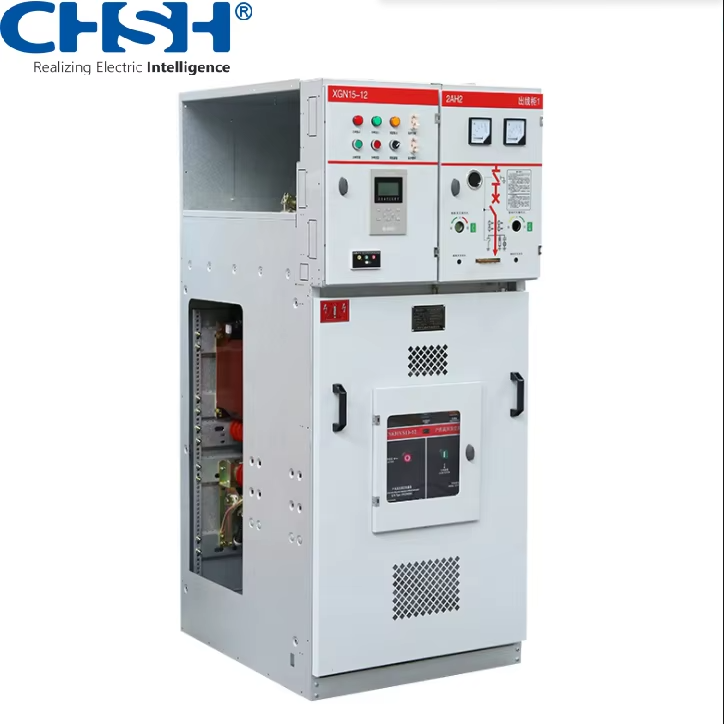
Modern vacuum switchgear, such as box-type fixed AC metal-enclosed configurations, integrates vacuum interrupters into compact, fully insulated assemblies that are well-suited for urban substations, industrial distribution boards, and renewable energy collection systems where space and environmental conditions are challenging.
Where SF6 Circuit Breakers Retain an Advantage
SF6 circuit breakers continue to hold a strong position in high-voltage and extra-high-voltage applications, typically above 72.5 kV and extending into the transmission range of 550 kV and beyond. At these voltage levels, the superior dielectric strength of SF6 gas allows for more compact equipment designs compared to air-insulated alternatives, and the interrupting performance at very high fault current levels remains difficult to match with vacuum technology alone.
Gas-insulated switchgear (GIS) substations, which rely on SF6 as the primary insulating medium throughout the entire bus and switching assembly, represent a major application domain where SF6 technology is deeply entrenched. The compactness of GIS installations makes them indispensable in urban transmission substations where land is scarce. In this segment, the comparison between vacuum and SF6 circuit breakers is less about preference and more about technical feasibility at the required voltage level.
That said, the industry is actively developing hybrid and alternative-gas GIS solutions to address the environmental concerns associated with SF6, and the boundary between vacuum and SF6 application domains is gradually shifting upward as vacuum interrupter technology continues to advance.
Maintenance, Safety, and Total Cost of Ownership
Maintenance Requirements Compared
One of the most practical differences between vacuum and SF6 circuit breakers lies in their maintenance profiles. Vacuum interrupters are sealed for life under normal conditions, meaning there is no routine gas pressure checking, no refilling schedule, and no need to monitor for leaks. Maintenance activities for vacuum breakers typically focus on the mechanical drive mechanism, contact wear indicators, and insulation condition — all of which can be assessed without opening the interrupter itself.
SF6 breakers require periodic gas density monitoring to ensure that the insulating and arc-quenching medium remains at the correct pressure. Any detected leakage must be addressed promptly, as low gas density directly compromises both dielectric performance and interrupting capability. Maintenance teams working on SF6 equipment must be trained in gas handling procedures and equipped with gas recovery systems to prevent atmospheric release during servicing.
Over a 20 to 30-year asset lifecycle, the cumulative maintenance cost difference between vacuum and SF6 circuit breakers can be substantial, particularly for large fleets. Facilities with limited technical staffing or those operating in remote locations often find that the lower maintenance burden of vacuum technology translates directly into reduced operational expenditure and improved system availability.
Safety Profiles and Operational Risk
From a safety standpoint, vacuum circuit breakers present a lower risk profile during routine maintenance. The absence of toxic gas byproducts means that technicians are not exposed to hazardous decomposition products when inspecting or replacing components. The sealed interrupter design also eliminates the risk of gas leaks that could create oxygen-deficient atmospheres in enclosed switchgear rooms — a genuine concern with SF6 equipment in poorly ventilated spaces.
SF6 gas itself is non-toxic in its pure form, but its arc decomposition products are highly toxic and corrosive. Exposure to these byproducts during maintenance of heavily used SF6 breakers requires full respiratory protection and careful decontamination procedures. Regulatory requirements for SF6 handling are becoming more stringent in many jurisdictions, adding compliance obligations that do not apply to vacuum-based installations.
Both vacuum and SF6 circuit breakers are designed to meet rigorous international safety standards, and both can be engineered for internal arc fault containment in metal-enclosed switchgear. The safety distinction is therefore most relevant during maintenance activities rather than during normal operation, where both technologies perform reliably when properly specified and installed.
FAQ
Which is better for medium-voltage distribution: vacuum or SF6 circuit breakers?
For medium-voltage applications up to approximately 40.5 kV, vacuum circuit breakers are generally the preferred choice due to their lower maintenance requirements, absence of greenhouse gas concerns, compact design, and high mechanical endurance. SF6 breakers remain relevant at higher voltage levels where vacuum technology has not yet achieved equivalent interrupting performance, but for standard distribution switchgear, vacuum technology is increasingly the industry default.
Are vacuum and SF6 circuit breakers interchangeable in existing switchgear panels?
Not directly. While both types serve the same fundamental switching function, they differ in physical dimensions, gas handling requirements, and interface designs. Retrofitting an SF6 breaker with a vacuum equivalent — or vice versa — requires careful engineering assessment to ensure mechanical compatibility, electrical clearance compliance, and proper coordination with protection relay settings. Many modern switchgear platforms are designed specifically for one technology or the other.
How do vacuum and SF6 circuit breakers compare in terms of lifespan?
Both technologies are designed for long service lives, typically 20 to 30 years or more under normal operating conditions. Vacuum interrupters have defined mechanical and electrical endurance ratings, and the interrupter bottle itself is replaced as a sealed unit when it reaches end of life. SF6 breakers may require more frequent gas-related maintenance interventions, but the overall structural lifespan is comparable. The key differentiator is the maintenance intensity required to sustain performance over that lifespan.
What is driving the shift away from SF6 circuit breakers in new installations?
The primary driver is environmental regulation. SF6 has an extremely high global warming potential, and regulatory frameworks in multiple regions are restricting or phasing out its use in new medium-voltage equipment. Combined with the lower maintenance burden and improved performance of modern vacuum technology, this regulatory pressure is accelerating the adoption of vacuum circuit breakers in distribution-level applications where SF6 was previously the standard choice.
Table of Contents
- Arc-Quenching Technology: The Fundamental Difference
- Environmental and Regulatory Considerations
- Voltage Range and Application Suitability
- Maintenance, Safety, and Total Cost of Ownership
-
FAQ
- Which is better for medium-voltage distribution: vacuum or SF6 circuit breakers?
- Are vacuum and SF6 circuit breakers interchangeable in existing switchgear panels?
- How do vacuum and SF6 circuit breakers compare in terms of lifespan?
- What is driving the shift away from SF6 circuit breakers in new installations?