
 EN
EN
When engineers and utility planners evaluate the long-term performance of an electrical grid, one factor consistently rises to the top of the conversation: the design of the switchgear installed throughout the network. Far from being a passive component, switchgear actively governs how power is routed, isolated, and protected across every segment of the grid. A well-engineered switchgear solution does not merely respond to faults — it shapes the conditions under which faults are less likely to cascade into widespread outages. Understanding this relationship is essential for any organization responsible for grid infrastructure, whether at the utility scale or within a large industrial facility.
The design choices embedded in switchgear — from the arc-quenching medium and busbar configuration to the enclosure type and protection relay integration — have compounding effects over decades of service. A substation that operates reliably for thirty years does so in large part because the switchgear at its core was designed with longevity, maintainability, and fault tolerance in mind. This article examines exactly how those design decisions translate into measurable grid reliability outcomes, and what procurement and engineering teams should prioritize when specifying switchgear for critical infrastructure.
The Structural Foundation of Grid Reliability
How Enclosure Design Affects Operational Safety
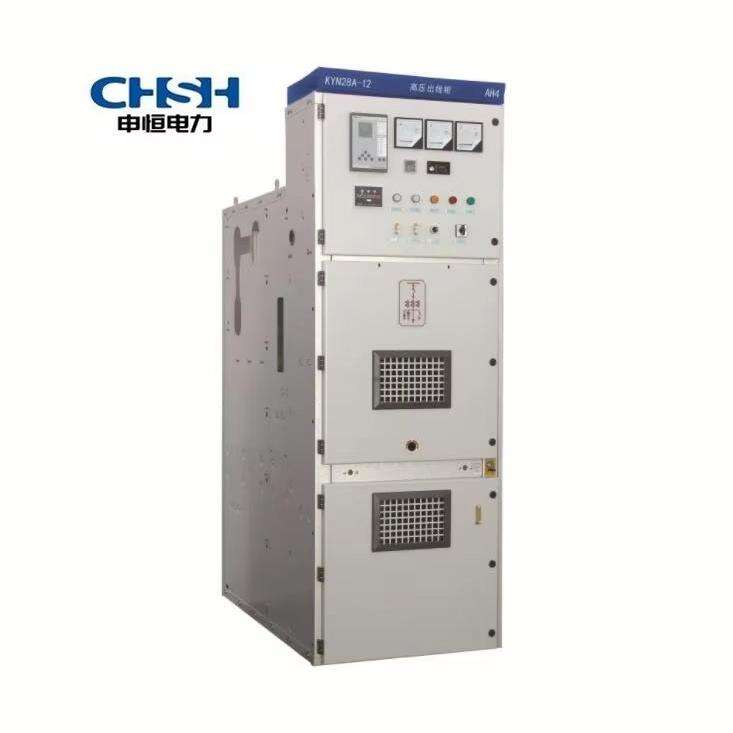
The physical architecture of a switchgear enclosure is not merely a housing decision — it is a safety and reliability statement. Armored, metal-enclosed designs compartmentalize the busbar, circuit breaker, and cable termination zones so that a fault in one section cannot propagate to adjacent sections. This compartmentalization is one of the most consequential design features in modern medium-voltage switchgear, directly limiting the blast radius of internal arc events.
Removable or withdrawable switchgear designs add another layer of operational resilience. When a circuit breaker can be racked out without de-energizing the entire panel, maintenance teams can service individual units while the rest of the switchgear continues to carry load. This capability dramatically reduces planned outage windows and supports the kind of continuous availability that grid operators depend on over multi-decade service horizons.
The degree of ingress protection — against dust, moisture, and corrosive atmospheres — also plays a defining role in long-term reliability. Switchgear deployed in coastal substations, industrial environments, or regions with high humidity must be specified with enclosure ratings that match the ambient conditions. Inadequate environmental protection accelerates insulation degradation, increases the risk of tracking faults, and shortens the effective service life of the entire assembly.
Busbar Configuration and Fault Current Management
The busbar system within a switchgear assembly determines how current is distributed across the installation and how the system behaves under fault conditions. Single busbar arrangements are simpler and more economical, but they create a single point of failure that can take an entire substation offline during maintenance or a fault event. Double busbar and bus-section designs introduce redundancy that allows operators to reconfigure the network without interrupting supply.
Fault current withstand ratings — both the peak and the short-time values — must be matched to the prospective fault levels at the point of installation. Switchgear that is under-rated for fault current will experience mechanical and thermal stress during fault events that progressively weakens connections, deforms busbars, and degrades insulation. Over time, this cumulative damage manifests as increased failure rates and reduced reliability across the grid segment served by that switchgear.
Proper busbar design also includes attention to thermal management. Busbars operating continuously near their rated current capacity generate heat that must be dissipated effectively. Poor thermal design leads to elevated operating temperatures that accelerate insulation aging and increase contact resistance at joints, both of which are precursors to reliability failures that compound over years of service.
Protection System Integration and Its Role in Grid Stability
Relay Coordination and Selective Tripping
The protection relays integrated into switchgear are the intelligence layer that determines how the grid responds to abnormal conditions. When protection systems are well-coordinated, a fault on a downstream feeder causes only the nearest upstream switchgear to trip, isolating the fault while leaving the rest of the network energized. This selectivity is the operational definition of grid reliability — the ability to contain disturbances without cascading them into broader outages.
Achieving proper relay coordination requires that the switchgear design accommodates the full range of protection functions needed at each network node. Modern medium-voltage switchgear should support overcurrent, earth fault, differential, and distance protection as a minimum, with the flexibility to integrate additional functions as grid topology evolves. Switchgear that constrains protection options forces engineers to accept compromises in coordination that degrade long-term reliability.
The physical integration of protection relays within the switchgear panel — including the quality of current transformer connections, the routing of control wiring, and the accessibility of relay settings — affects both the accuracy of protection and the ease of testing and commissioning. Poorly integrated protection systems are more likely to develop wiring faults, experience CT saturation errors, or be left in suboptimal settings because testing is too difficult to perform regularly.
Arc Flash Mitigation Through Design
Internal arc flash events represent one of the most severe reliability and safety risks in switchgear installations. The energy released during an arc flash can destroy equipment, injure personnel, and cause extended outages that affect large portions of the grid. Switchgear design has a direct and quantifiable impact on arc flash risk through several mechanisms.
Arc-resistant switchgear designs channel the energy and gases produced by an internal arc away from personnel and toward controlled pressure relief vents. This design approach does not prevent arc flash events, but it dramatically limits their consequences — both in terms of equipment damage and personnel safety. For grid operators, this means faster recovery times after fault events and lower lifecycle costs associated with equipment replacement and repair.
The arc-quenching medium used in the circuit breaker — whether vacuum, SF6, or air — also influences arc flash severity and the speed of fault clearance. Vacuum interrupters, widely used in modern medium-voltage switchgear, offer fast and consistent arc extinction that limits the energy let-through during fault clearing. Faster fault clearance directly reduces the thermal and mechanical stress imposed on the switchgear and the connected network, supporting long-term reliability.
Maintainability as a Reliability Design Parameter
Access Design and Inspection Intervals
Reliability over a thirty-year service life is not achieved at the point of installation — it is sustained through a maintenance program that depends heavily on how the switchgear was designed for access. Switchgear that requires extensive disassembly to inspect contacts, test protection relays, or lubricate mechanisms will inevitably be maintained less frequently than designs that make these tasks straightforward. The result is a direct correlation between access design and the actual maintenance intervals achieved in the field.
Withdrawable circuit breaker designs are particularly valuable in this context. The ability to remove a breaker from service, test it on a bench, and return it to service without affecting adjacent circuits enables a maintenance discipline that keeps the switchgear in optimal condition throughout its service life. Fixed-mounted designs, while lower in initial cost, often impose higher long-term costs through more complex maintenance procedures and longer outage windows.
Condition monitoring provisions built into the switchgear design — such as partial discharge sensors, temperature monitoring points, and mechanical operation counters — extend the value of maintenance activities by providing data that supports condition-based maintenance strategies. Rather than maintaining on fixed time intervals, operators can direct resources to the switchgear units that actually need attention, improving both reliability and maintenance efficiency.
Spare Parts Availability and Design Standardization
Long-term grid reliability depends on the ability to restore switchgear to service quickly after a fault or failure. This restoration speed is directly influenced by the availability of spare parts and the degree to which the switchgear design has been standardized across the installation. Proprietary designs with limited spare parts availability create vulnerability — a single failed component can leave a circuit breaker out of service for weeks if the replacement part must be specially manufactured.
Standardized switchgear designs that use common components across multiple panel types and voltage ratings allow operators to maintain a smaller spare parts inventory while covering a wider range of failure scenarios. This standardization also simplifies technician training, reduces the risk of installation errors during maintenance, and supports faster fault diagnosis because technicians are working with familiar equipment.
When specifying switchgear for long-term grid applications, procurement teams should evaluate not only the initial technical specification but also the manufacturer's commitment to spare parts availability over the expected service life. A switchgear design that meets all technical requirements at the time of purchase but becomes unsupportable within fifteen years represents a significant long-term reliability risk.
Insulation Technology and Aging Characteristics
Solid Insulation Versus Gas-Insulated Designs
The insulation system within switchgear is one of the primary determinants of long-term dielectric reliability. Traditional air-insulated switchgear relies on physical clearances and solid insulation materials to maintain voltage isolation between live parts. While proven and well-understood, air-insulated designs are sensitive to contamination, humidity, and the gradual degradation of solid insulation materials over time.
Gas-insulated switchgear uses SF6 or alternative gases to provide dielectric strength in a compact, sealed environment. The sealed nature of gas-insulated designs largely eliminates the contamination and humidity sensitivity that affects air-insulated equipment, making them particularly well-suited to harsh environments. However, the integrity of the gas sealing system becomes a critical reliability parameter — gas leaks that go undetected can lead to dielectric failures without warning.
Solid-insulated switchgear, using epoxy resin or similar materials to encapsulate live parts, represents a growing segment of the medium-voltage market. These designs offer the compactness of gas-insulated equipment without the environmental concerns associated with SF6, and their sealed construction provides strong resistance to environmental contamination. The long-term aging characteristics of solid insulation systems are an active area of research, and specifiers should evaluate the track record of specific designs before committing to large-scale deployments.
Partial Discharge and Insulation Condition Assessment
Partial discharge activity within switchgear insulation is one of the earliest indicators of insulation degradation. Left undetected, partial discharge progressively erodes insulation integrity until a complete dielectric breakdown occurs — often at the worst possible time, during peak load conditions or adverse weather. Switchgear designs that incorporate partial discharge monitoring capability allow operators to detect and address insulation problems before they develop into faults.
The ability to perform partial discharge measurements on in-service switchgear without taking it out of service is a significant operational advantage. Some modern switchgear designs include permanently installed sensors that enable continuous or periodic partial discharge monitoring as part of a broader condition monitoring program. This capability transforms insulation management from a reactive activity into a proactive one, with direct benefits for grid reliability.
Temperature monitoring at cable terminations and busbar joints complements partial discharge monitoring by detecting the resistive heating that accompanies deteriorating connections. Together, these condition monitoring capabilities give grid operators the information they need to intervene before a developing fault becomes an unplanned outage — a capability that is only available if the switchgear was designed to support it from the outset.
FAQ
What switchgear design features most directly improve grid reliability?
The features with the greatest impact on long-term grid reliability include compartmentalized enclosure design, withdrawable circuit breaker arrangements, integrated protection relay systems with selective tripping capability, and built-in condition monitoring provisions. Together, these design elements limit fault propagation, support proactive maintenance, and enable fast restoration after fault events. The switchgear specified for critical grid applications should be evaluated against all of these criteria, not just initial cost and basic electrical ratings.
How does the choice of arc-quenching medium affect long-term switchgear performance?
The arc-quenching medium determines how quickly and consistently the circuit breaker extinguishes the arc during fault clearing. Vacuum interrupters offer fast, repeatable arc extinction with minimal maintenance requirements and no consumable arc-quenching media, making them well-suited to applications where reliability and low maintenance are priorities. SF6 interrupters provide excellent performance at higher voltage levels but introduce environmental and regulatory considerations. The choice of arc-quenching medium should be matched to the voltage level, fault current requirements, and maintenance philosophy of the specific application.
Why is withdrawable switchgear preferred for critical grid applications?
Withdrawable switchgear allows individual circuit breakers to be removed from service for maintenance, testing, or replacement without de-energizing the entire panel. This capability is critical for grid applications where continuous availability is required, because it enables maintenance activities to be performed during normal operation rather than during planned outages. Over a thirty-year service life, the cumulative reduction in planned outage time associated with withdrawable switchgear represents a significant reliability advantage compared to fixed-mounted designs.
How should grid operators evaluate switchgear for long-term service life?
Evaluation should go beyond the initial technical specification to include maintainability, spare parts availability, condition monitoring capability, and the manufacturer's track record with similar installations. Grid operators should request information on the expected service life of key components — particularly vacuum interrupters, insulation systems, and protection relays — and assess whether the switchgear design supports the maintenance intervals and condition monitoring strategies that their reliability program requires. Total cost of ownership over the full service life is a more meaningful metric than purchase price alone.
Table of Contents
- The Structural Foundation of Grid Reliability
- Protection System Integration and Its Role in Grid Stability
- Maintainability as a Reliability Design Parameter
- Insulation Technology and Aging Characteristics
-
FAQ
- What switchgear design features most directly improve grid reliability?
- How does the choice of arc-quenching medium affect long-term switchgear performance?
- Why is withdrawable switchgear preferred for critical grid applications?
- How should grid operators evaluate switchgear for long-term service life?