
 EN
EN
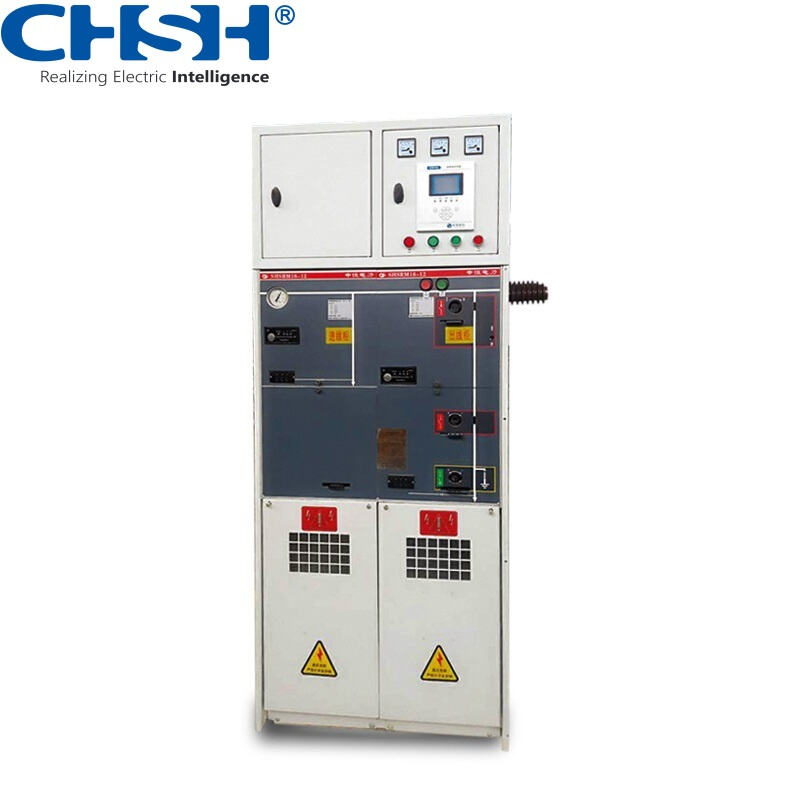
Urban power distribution networks are growing more complex every year. As cities expand, the demand for uninterrupted, safe, and flexible electricity supply intensifies across commercial districts, residential high-rises, underground transit systems, and industrial hubs. In this evolving landscape, the Ring Main Unit RMU has emerged as one of the most critical components in medium-voltage switchgear design. It enables utilities and facility operators to maintain a continuous loop of power supply while providing the switching, protection, and isolation capabilities that dense urban grids demand.
Understanding exactly how the Ring Main Unit RMU enhances reliability requires looking at both its mechanical architecture and its role within a broader network topology. Unlike conventional radial substations, the ring configuration keeps power flowing from two directions simultaneously, so even if one feed is interrupted, the other maintains supply. This structural redundancy is at the heart of why urban planners and electrical engineers consistently specify the Ring Main Unit RMU as the preferred solution for secondary distribution in city environments.
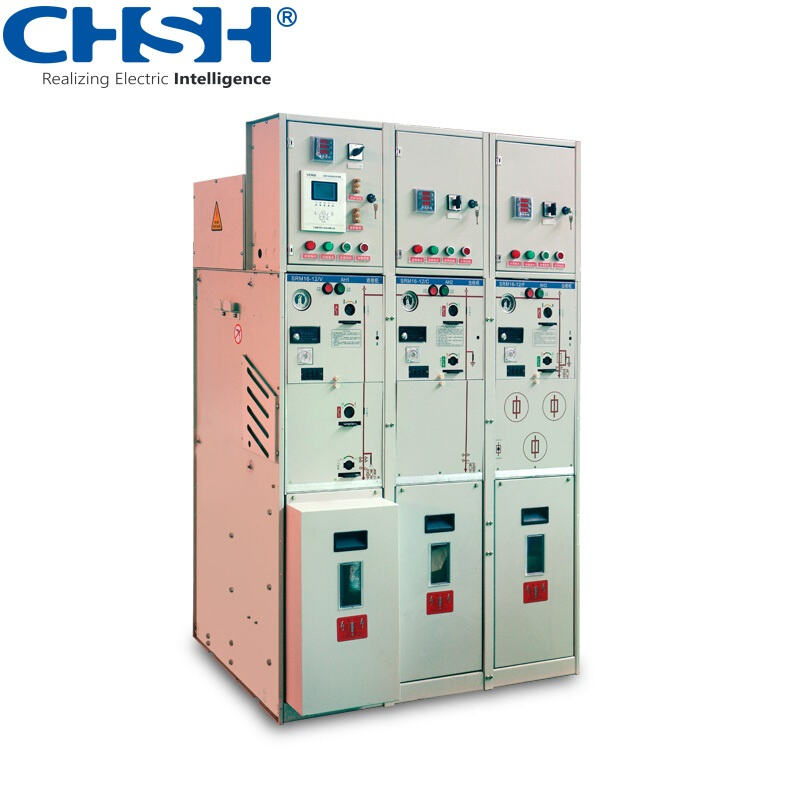
The Core Architecture That Drives Urban Reliability
Ring Topology and Redundant Feed Design
The defining characteristic of any Ring Main Unit RMU is its integration into a closed-loop or ring circuit. In a traditional radial network, power flows in a single direction from the substation to the load. If a fault occurs anywhere along that path, every customer downstream loses power until technicians locate and isolate the fault. In a ring configuration, the same distribution cable forms a continuous loop, with the Ring Main Unit RMU positioned at key nodes along that loop to manage switching and protection.
Because the loop carries power from two directions, any single-point fault can be isolated at the nearest switching nodes, and the remaining sections of the ring continue to receive power from the undisturbed feed direction. This dramatically reduces both the duration and the geographic extent of supply interruptions. For densely populated urban areas where even a brief outage causes significant economic and social disruption, this dual-feed capability is a non-negotiable reliability standard.
Each Ring Main Unit RMU in the ring typically contains two ring-circuit switches for the incoming and outgoing ring feeds, plus one or more cable feeders or transformer protection units for the connected loads. This modular arrangement allows engineers to design networks where load points can be supplied from either direction, and switching operations can be performed safely and quickly, often without the need for de-energizing the whole network.
Compact and Sealed Construction for Urban Environments
Urban installations face physical constraints that rural substations do not. Space is at a premium, and equipment is often placed in basement switchrooms, underground vaults, or kiosk enclosures on public streets. The Ring Main Unit RMU is engineered specifically to meet these requirements. Its compact footprint and sealed construction allow it to be installed in confined spaces without compromising safety or performance.
Modern designs, particularly those using solid insulation technology, eliminate the need for oil or SF6 gas as the insulating and arc-quenching medium. Solid insulated Ring Main Unit RMU units encapsulate all live parts within epoxy resin or other solid dielectric materials, removing the risk of oil leaks, gas pressure loss, and environmental contamination. This makes them especially suited for urban environments where proximity to people and infrastructure demands the highest levels of safety and environmental responsibility.
The sealed architecture also shields internal components from humidity, dust, pollution, and corrosive atmospheres—conditions that are common in underground or coastal urban settings. Reduced maintenance requirements follow naturally, since sealed units do not need routine gas pressure checks, oil sampling, or desiccant replacement. This directly contributes to reliability by minimizing maintenance-related outages and human intervention risks.
Fault Management and Network Restoration Speed
Isolation Without Total Supply Loss
One of the most tangible ways the Ring Main Unit RMU enhances reliability is through its ability to isolate faults without causing a complete supply interruption to the affected zone. When a fault occurs on a cable section between two ring nodes, the switches within the relevant Ring Main Unit RMU devices can be opened to isolate only that faulty segment. All other ring sections remain energized, and customers not directly connected to the faulted cable continue receiving power uninterrupted.
This capability is particularly valuable in urban networks where the consequences of broad outages cascade quickly. Hospitals, data centers, emergency services, and transport systems all depend on high-availability power. The Ring Main Unit RMU enables network operators to contain a fault to the smallest possible segment of the ring, protecting the majority of consumers while crews work to repair the damaged cable section.
In networks equipped with automated switching or remote control functionality, this fault isolation can happen in seconds rather than minutes or hours. Automated reclosers and remote terminal units integrated with the Ring Main Unit RMU allow control room operators to re-configure the network topology from a SCADA interface, restoring supply to isolated sections by re-energizing from the alternate ring direction before any field crew even arrives on site.
Protection Coordination in Dense Load Environments
Urban distribution networks are characterized by high load density and short cable runs between substations. This means fault currents can be extremely high, and protection devices must respond accurately to prevent equipment damage and ensure personnel safety. The Ring Main Unit RMU incorporates overcurrent protection, earth fault relays, and in some configurations, directional protection elements that allow it to distinguish between faults in different directions along the ring.
Proper protection coordination ensures that only the fuse or relay closest to the fault operates, preserving supply to all other healthy sections. When a Ring Main Unit RMU is equipped with microprocessor-based protection relays, it can achieve highly selective tripping that minimizes the impact of any single fault event on the broader network. This selectivity is a direct contributor to the reliability performance metrics that utility companies use to evaluate their distribution assets, including SAIFI, SAIDI, and CAIDI indices.
The integration of digital protection functions within a compact Ring Main Unit RMU enclosure also means that modern urban substations can operate with a smaller physical footprint while offering more sophisticated protection logic than older oil-type switchgear. This technological evolution supports the reliability demands of smart grid and city-of-the-future initiatives without requiring costly civil works to enlarge substation buildings.
Operational Safety and Long-Term Asset Performance
Safe Switching Under Live Network Conditions
Switching operations in live medium-voltage networks carry inherent risks. Operators must be confident that the equipment will interrupt load currents and fault currents reliably, without generating dangerous arcs or failing mechanically. The Ring Main Unit RMU is designed and tested to perform switching operations under the full range of network conditions it will encounter during its service life. Arc-quenching technologies—whether vacuum, SF6, or solid insulation-based—ensure that switching transients are contained safely within the sealed enclosure.
For solid insulated versions, the entire high-voltage assembly is embedded in a solid dielectric, which physically prevents any internal arc from propagating outside the housing. This arc-containment property significantly reduces the risk of catastrophic failure events and provides an additional layer of operator safety during maintenance or switching activities. When technicians work in cramped urban substation environments, this safety margin is critically important.
Interlocking mechanisms built into the Ring Main Unit RMU prevent dangerous operational sequences, such as closing a switch onto a grounded section or opening a switch under fault current without the proper protection function enabled. These mechanical and electrical interlocks are essential in environments where multiple operators or automated systems may be acting simultaneously during a network emergency.
Durability and Reduced Maintenance Cycles
Reliability is not only about how a Ring Main Unit RMU responds during a fault—it is equally about how well it performs over decades of continuous service. Urban substations are frequently expected to operate for 20 to 30 years with minimal intervention. The materials, construction standards, and testing protocols applied to modern Ring Main Unit RMU equipment are aligned with these long service life expectations.
Solid insulation technology in particular excels in this regard. With no fluid dielectrics to age or leak, no gas pressure to monitor, and no oil-immersed components to sample annually, the maintenance workload for a solid insulated Ring Main Unit RMU is substantially lower than for legacy technologies. Reduced maintenance means fewer planned outages for inspection, lower operational costs, and a smaller chance of human error introducing a new fault during routine work.
The mechanical life ratings of modern vacuum or solid-insulated switching elements within a Ring Main Unit RMU are typically rated for thousands of operations, far exceeding the switching frequency expected in normal distribution network service. This endurance ensures that the equipment remains operationally reliable throughout its design life, supporting the continuous uptime expectations of urban consumers and commercial operators alike.
Smart Grid Integration and Future-Ready Urban Networks
Remote Monitoring and Automation Compatibility
As urban utilities transition toward smart grid architectures, the ability to monitor and control distribution equipment remotely becomes a fundamental reliability requirement. The Ring Main Unit RMU is increasingly supplied with integral remote terminal units, communication interfaces supporting IEC 61850 or DNP3 protocols, and sensor suites that provide real-time data on voltage, current, power quality, and switch status. This digital connectivity transforms the Ring Main Unit RMU from a passive switching device into an active node in the intelligent distribution network.
With remote monitoring in place, utilities can detect developing faults—such as rising partial discharge activity or cable insulation degradation—before they escalate into supply interruptions. Predictive maintenance strategies enabled by this data reduce unexpected outages and allow operators to schedule work during low-demand periods. This shift from reactive to predictive maintenance directly improves the reliability metrics that regulators and customers use to assess utility performance.
Automation algorithms can use real-time data from multiple Ring Main Unit RMU nodes across the ring to make switching decisions in milliseconds, far faster than any manual response could achieve. Self-healing network topologies, where the ring automatically reconfigures around a fault without human intervention, represent the logical culmination of this technology, and the Ring Main Unit RMU is the key hardware building block that makes self-healing urban grids possible.
Scalability for Growing Urban Load Demand
Urban power demand is not static. New residential developments, electric vehicle charging infrastructure, data center expansion, and renewable energy integration all place new and varying loads on urban distribution networks. The modular nature of the Ring Main Unit RMU allows network planners to extend and adapt ring circuits without redesigning entire substations. Additional feeder modules or protection units can often be added to existing enclosures, or new Ring Main Unit RMU nodes can be inserted into the ring at new load connection points.
This scalability ensures that reliability improvements made today are not undermined by tomorrow's load growth. By designing the ring network with headroom and specifying Ring Main Unit RMU equipment with appropriate current ratings—such as those capable of handling 630A to 3150A rated currents at 10kV and 50Hz—engineers can accommodate significant load increases without replacing the primary switchgear infrastructure.
The alignment between smart metering, distributed generation management, and the switching flexibility of the Ring Main Unit RMU also positions urban networks to integrate prosumer energy resources without compromising supply quality or protection coordination. In this sense, specifying the right Ring Main Unit RMU today is an investment in the reliability and adaptability of the urban power network for the next several decades.
FAQ
What makes a Ring Main Unit RMU different from a standard distribution substation?
A standard distribution substation typically connects loads in a radial configuration from a single feeding point. A Ring Main Unit RMU, by contrast, is designed to operate within a closed-loop ring circuit, where power flows from two directions to every load point. This dual-feed topology means that faults can be isolated at specific nodes without cutting supply to the entire network segment, making the Ring Main Unit RMU fundamentally more resilient than a radial arrangement for urban distribution.
Why is solid insulation preferred in urban Ring Main Unit RMU installations?
Solid insulation eliminates the oil and gas dielectrics used in older switchgear technologies, removing the associated risks of leaks, pressure loss, environmental contamination, and fire. For urban installations in confined, publicly accessible, or environmentally sensitive locations, a solid insulated Ring Main Unit RMU offers superior safety, minimal maintenance requirements, and a more compact design. These characteristics are well aligned with the operational and regulatory demands of modern city distribution infrastructure.
How does automation improve the reliability contribution of a Ring Main Unit RMU?
When a Ring Main Unit RMU is equipped with remote terminal units and communication interfaces, it can be integrated into a SCADA or distribution management system. This integration allows fault detection, isolation, and network restoration to occur automatically within seconds of a fault event, without requiring physical presence of maintenance crews. Automated self-healing ring networks built around the Ring Main Unit RMU significantly reduce the duration of supply interruptions and improve utility reliability performance indices such as SAIDI and SAIFI.
What current and voltage ratings should be considered when specifying a Ring Main Unit RMU for urban use?
The appropriate specifications depend on the network voltage level, expected load growth, and fault current levels at the installation point. For 10kV urban distribution networks operating at 50Hz, Ring Main Unit RMU equipment is commonly specified with rated currents ranging from 630A for lighter load feeders up to 3150A for heavily loaded circuits or transformer connections. It is important to verify that the chosen Ring Main Unit RMU meets the short-circuit withstand ratings applicable to the specific network location, as urban fault currents can be significantly higher than those in rural distribution systems.
Table of Contents
- The Core Architecture That Drives Urban Reliability
- Fault Management and Network Restoration Speed
- Operational Safety and Long-Term Asset Performance
- Smart Grid Integration and Future-Ready Urban Networks
-
FAQ
- What makes a Ring Main Unit RMU different from a standard distribution substation?
- Why is solid insulation preferred in urban Ring Main Unit RMU installations?
- How does automation improve the reliability contribution of a Ring Main Unit RMU?
- What current and voltage ratings should be considered when specifying a Ring Main Unit RMU for urban use?