
 EN
EN
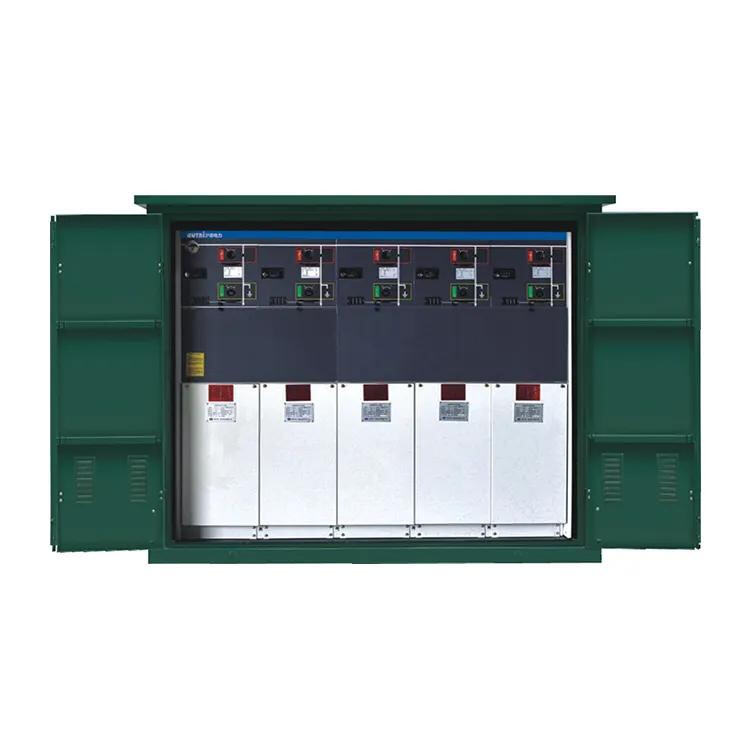
Choosing the right electrical transformer box is one of the most consequential decisions in any power distribution project. Whether you are planning a new industrial facility, upgrading an aging substation, or deploying infrastructure for a commercial development, the selection process demands careful technical evaluation, regulatory awareness, and a clear understanding of your operational environment. A poorly matched electrical transformer box can lead to energy losses, safety hazards, costly downtime, and premature equipment failure — outcomes that no project manager or electrical engineer wants to face after installation.
The market offers a wide range of electrical transformer box configurations — from compact prefabricated cubical substations to fully customized medium-voltage enclosures — and each type carries its own set of performance characteristics, installation requirements, and lifecycle considerations. This article walks through the critical factors that engineers, procurement specialists, and project owners must evaluate before committing to a specific electrical transformer box solution, ensuring that the final choice aligns with both technical demands and long-term operational goals.
Understanding Your Load Requirements and Voltage Specifications
Defining the Power Demand Profile
Before evaluating any electrical transformer box, the first step is to establish a precise load profile for the installation site. This means calculating peak demand, average load, and anticipated load growth over the equipment's expected service life. Undersizing a transformer box creates thermal stress and accelerates insulation degradation, while oversizing leads to inefficient operation and unnecessary capital expenditure. A thorough load analysis forms the foundation of every sound selection decision.
Load profiles vary significantly across application types. Industrial facilities with heavy motor loads experience high inrush currents and harmonic distortion that place unique demands on transformer windings and protective devices. Commercial buildings may have more predictable load curves but still require careful attention to power quality. Data centers and renewable energy installations introduce their own specific requirements around voltage stability and fault tolerance. The electrical transformer box you select must be rated and configured to handle the actual conditions it will face, not just nominal averages.
It is also important to account for future expansion. Many projects underestimate load growth, and retrofitting or replacing an electrical transformer box mid-project is expensive and disruptive. Selecting a unit with appropriate headroom — or one that supports modular capacity upgrades — is a practical strategy that pays dividends over time.
Matching Voltage Ratios and System Compatibility
Every electrical transformer box must be matched to the primary voltage supplied by the utility and the secondary voltage required by the downstream distribution system. Medium-voltage applications, such as those operating at 10 kV, 20 kV, or 36 kV, require enclosures and internal components rated for those specific voltage classes. Mismatches between the transformer's voltage ratio and the system's actual operating voltage can result in insulation breakdown, equipment damage, and serious safety incidents.
Tap changer configurations are another voltage-related consideration. On-load tap changers allow voltage adjustment under live conditions, which is valuable in systems where supply voltage fluctuates. Off-load tap changers are simpler and more economical but require the transformer to be de-energized for adjustment. Understanding which type suits your operational environment is an important part of the selection process for any electrical transformer box.
Evaluating Enclosure Type, Protection Rating, and Installation Environment
Selecting the Right Enclosure Configuration
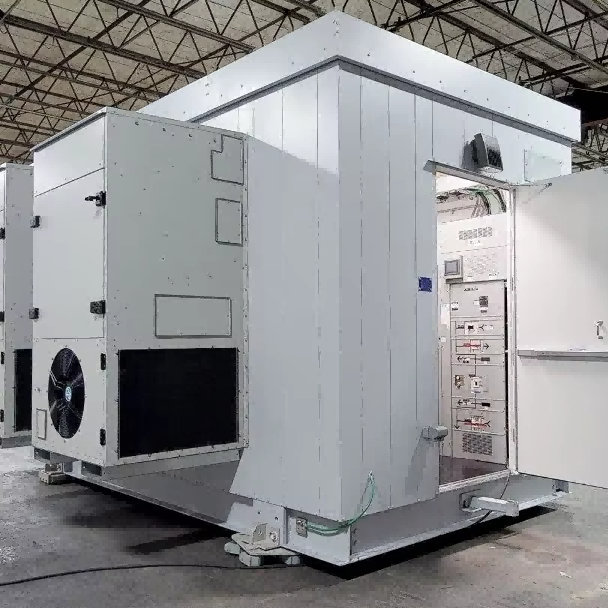
The physical enclosure of an electrical transformer box must be appropriate for the installation environment. Prefabricated cubical substations, also known as compact or packaged substations, integrate the transformer, medium-voltage switchgear, and low-voltage distribution components within a single weatherproof enclosure. This configuration is particularly well-suited for outdoor installations, urban environments with limited space, and projects that require rapid deployment with minimal civil works.
Conventional indoor substations, by contrast, house the transformer and switchgear in separate rooms within a purpose-built structure. While this approach offers greater flexibility for large-scale installations and easier maintenance access, it requires significantly more construction time and cost. The choice between a prefabricated electrical transformer box and a conventional substation layout depends on site constraints, budget, timeline, and the complexity of the power distribution network being served.
For applications in harsh or remote environments, the structural integrity and material quality of the enclosure become especially important. Corrosion-resistant coatings, reinforced steel construction, and sealed cable entry points all contribute to long-term reliability. Evaluating the enclosure's mechanical robustness alongside its electrical specifications is essential when selecting an electrical transformer box for demanding field conditions.
IP and IK Ratings for Environmental Protection
Ingress protection (IP) ratings define how well an electrical transformer box resists the entry of dust and water. For outdoor installations, a minimum IP54 rating is typically required, while sites exposed to heavy rainfall, flooding risk, or dusty industrial environments may demand IP65 or higher. Selecting an enclosure with an inadequate IP rating is a common and costly mistake that leads to premature insulation failure and increased maintenance frequency.
IK ratings measure resistance to mechanical impact, which is relevant for installations in public areas, construction zones, or locations where accidental physical contact is likely. An electrical transformer box installed in an urban streetside location, for example, should carry a high IK rating to withstand incidental impacts without compromising the integrity of the enclosure or the safety of bystanders. Both IP and IK ratings should be verified against the specific conditions of the deployment site before finalizing a selection.
Assessing Safety Standards, Certifications, and Regulatory Compliance
International and Regional Standards
Compliance with recognized international standards is non-negotiable when selecting an electrical transformer box. Standards such as IEC 62271 for high-voltage switchgear, IEC 60076 for power transformers, and IEC 61330 for prefabricated substations define the minimum performance, testing, and safety requirements that equipment must meet. Purchasing equipment that carries verified certification to these standards provides assurance that the unit has been independently tested and validated under controlled conditions.
Regional and national regulations may impose additional requirements beyond international standards. Grid connection agreements, utility specifications, and local electrical codes can all influence which configurations and protection schemes are permissible. Before specifying an electrical transformer box, it is essential to consult with the relevant utility and regulatory authorities to confirm that the selected equipment will be accepted for connection and operation within the local grid infrastructure.
Protection Schemes and Fault Management
An electrical transformer box must incorporate appropriate protection devices to detect and isolate faults quickly, minimizing damage to equipment and risk to personnel. Overcurrent protection, earth fault protection, differential protection for larger units, and surge arresters for lightning-prone areas are all elements that should be evaluated based on the specific risk profile of the installation. The protection scheme must be coordinated with upstream and downstream devices to ensure selective tripping — isolating only the faulted section without unnecessarily interrupting supply to healthy parts of the network.
Modern electrical transformer box designs increasingly incorporate smart monitoring and communication capabilities, allowing protection relays to be remotely configured, tested, and updated. This is particularly valuable for distributed network operators managing multiple substations across a wide geographic area. Evaluating the digital integration capabilities of a transformer box alongside its conventional protection features is an important consideration for forward-looking infrastructure projects.
Considering Maintenance Requirements and Total Cost of Ownership
Maintenance Access and Serviceability
The long-term cost of operating an electrical transformer box is heavily influenced by how easily it can be inspected, maintained, and repaired. Enclosure designs that provide clear access to all major components — including the transformer, switchgear, cable terminations, and protection relays — reduce the time and labor required for routine maintenance. Designs that require partial disassembly or specialized tooling for basic inspection tasks increase maintenance costs and the risk of errors during servicing.
Oil-filled transformers require periodic oil sampling and analysis to monitor insulation condition, while dry-type transformers eliminate this requirement at the cost of slightly higher losses in some configurations. The choice of transformer technology within the electrical transformer box affects not only initial cost but also the ongoing maintenance program, spare parts inventory, and the skill set required of maintenance personnel. These factors should be weighed carefully against the operational context of the installation.
Lifecycle Cost Analysis and Energy Efficiency
Capital cost is only one component of the total cost of ownership for an electrical transformer box. Energy losses — both no-load (core) losses and load losses — accumulate over the equipment's service life and can represent a significant financial burden, particularly for units operating continuously at high load factors. Selecting a transformer with low loss values, even at a higher initial price, often delivers a superior return on investment when evaluated over a 20- to 30-year service life.
Efficiency tiers defined by standards such as IEC 60076-20 provide a useful benchmark for comparing transformer loss performance. When evaluating an electrical transformer box, requesting detailed loss data from the manufacturer and performing a lifecycle cost calculation — factoring in local energy prices, load profile, and expected service life — gives a much clearer picture of true value than comparing purchase prices alone. This analysis is especially important for large-scale or high-utilization installations where even small differences in efficiency translate into substantial cost differences over time.
Smart Features, Scalability, and Future-Readiness
Digital Monitoring and Remote Management
The integration of digital intelligence into the electrical transformer box is no longer a premium option reserved for large utility projects — it is increasingly a standard expectation in modern power infrastructure. Smart transformer stations equipped with sensors, communication modules, and data logging capabilities allow operators to monitor temperature, load, voltage, and fault events in real time. This visibility enables predictive maintenance strategies that reduce unplanned outages and extend equipment life.
Remote management capabilities are particularly valuable for installations in locations where physical access is difficult or infrequent. An electrical transformer box that supports standard communication protocols such as IEC 61850 or Modbus can be integrated into a broader SCADA or energy management system, enabling centralized oversight of distributed assets. When evaluating smart features, it is important to assess not only the hardware capabilities but also the software ecosystem, cybersecurity provisions, and long-term vendor support for the digital platform.
Scalability and Adaptability for Evolving Grid Demands
Power infrastructure investments are long-term commitments, and the grid environment is changing rapidly. The growth of distributed renewable generation, electric vehicle charging infrastructure, and energy storage systems is reshaping load patterns and introducing new technical challenges for distribution networks. An electrical transformer box selected today must be capable of operating effectively within the grid conditions that will exist five, ten, or twenty years from now.
Scalable designs that allow for the addition of switchgear bays, the integration of battery storage, or the accommodation of bidirectional power flows offer greater long-term value than fixed configurations optimized only for current conditions. When evaluating an electrical transformer box for a project with a long service horizon, discussing future-readiness with the equipment supplier and reviewing the design's adaptability to emerging grid requirements is a prudent step that can prevent costly upgrades or replacements down the line.
FAQ
What voltage classes are typically available for an electrical transformer box?
An electrical transformer box is available across a wide range of voltage classes, from low-voltage units operating below 1 kV to medium-voltage configurations rated at 10 kV, 20 kV, 36 kV, and beyond. The appropriate voltage class depends on the primary supply voltage provided by the utility and the secondary distribution voltage required by the facility or network being served. Always confirm voltage specifications with both the utility and the equipment supplier before finalizing a selection.
How does the installation environment affect the choice of electrical transformer box?
The installation environment has a direct impact on the enclosure type, IP rating, material specification, and cooling method required for an electrical transformer box. Outdoor installations in humid, dusty, or coastal environments require higher ingress protection ratings and corrosion-resistant materials. Extreme temperature ranges may necessitate enhanced cooling systems or cold-weather packages. A thorough site assessment should always precede equipment specification to ensure the selected unit is suited to its actual operating conditions.
What is the difference between a prefabricated substation and a conventional electrical transformer box installation?
A prefabricated substation integrates the transformer, medium-voltage switchgear, and low-voltage distribution equipment within a single factory-assembled enclosure, reducing on-site installation time and civil construction requirements. A conventional electrical transformer box installation involves separate equipment housed within a purpose-built structure, offering greater flexibility for complex or large-scale networks but requiring more construction time and cost. The choice depends on project scale, site constraints, timeline, and budget.
How important is energy efficiency when selecting an electrical transformer box?
Energy efficiency is a critical selection criterion for any electrical transformer box, particularly for units that will operate continuously or at high load factors. No-load and load losses accumulate over the equipment's service life and can represent a significant portion of total lifecycle cost. Comparing transformer loss data against recognized efficiency standards and performing a full lifecycle cost analysis — rather than focusing solely on purchase price — is the most reliable way to identify the most cost-effective solution for a given application.
Table of Contents
- Understanding Your Load Requirements and Voltage Specifications
- Evaluating Enclosure Type, Protection Rating, and Installation Environment
- Assessing Safety Standards, Certifications, and Regulatory Compliance
- Considering Maintenance Requirements and Total Cost of Ownership
- Smart Features, Scalability, and Future-Readiness
-
FAQ
- What voltage classes are typically available for an electrical transformer box?
- How does the installation environment affect the choice of electrical transformer box?
- What is the difference between a prefabricated substation and a conventional electrical transformer box installation?
- How important is energy efficiency when selecting an electrical transformer box?