
 EN
EN
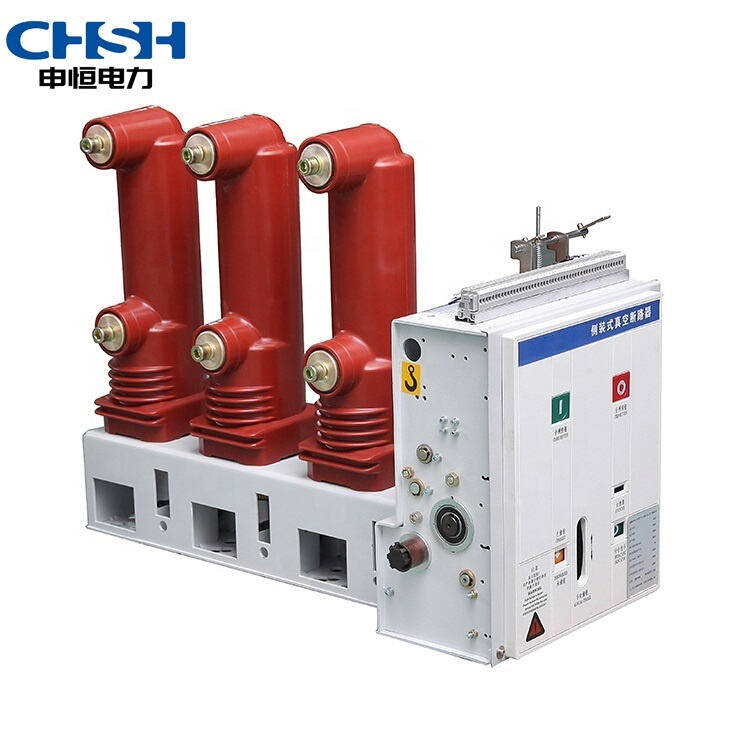
Selecting the right circuit breakers for industrial applications requires careful evaluation of multiple technical and operational factors that directly impact system reliability, safety, and long-term performance. Industrial facilities face unique challenges including high power demands, harsh environmental conditions, and stringent safety requirements that make proper circuit breaker selection critical for maintaining operational continuity and protecting valuable equipment investments.
The complexity of modern industrial electrical systems demands a systematic approach to circuit breaker evaluation that goes beyond basic current ratings. Engineers must consider voltage requirements, interrupting capacity, environmental conditions, maintenance requirements, and integration compatibility to ensure optimal protection and performance. Understanding these key selection criteria enables informed decision-making that balances initial investment costs with long-term operational benefits and safety compliance.
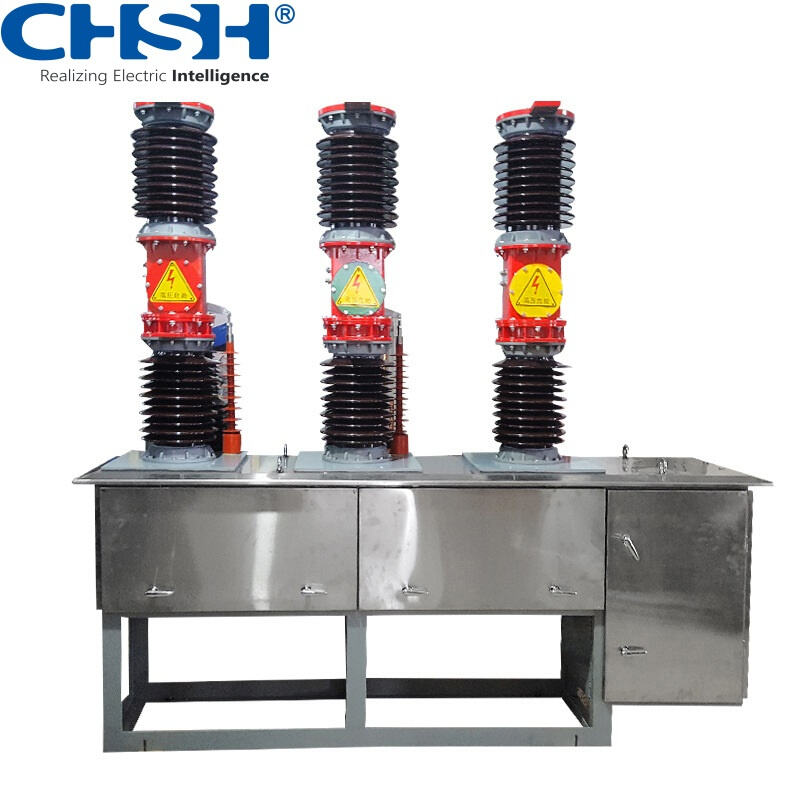
Electrical Performance Specifications
Voltage Rating and System Compatibility
The voltage rating represents one of the most fundamental selection criteria for industrial circuit breakers, as it must match or exceed the maximum system voltage under all operating conditions. Industrial applications typically involve medium to high voltage systems ranging from 4.16 kV to 38 kV or higher, requiring circuit breakers specifically designed for these voltage levels. The voltage rating must account for system transients, switching surges, and temporary overvoltages that can occur during normal operations.
System voltage configuration also influences circuit breaker selection, with three-phase systems requiring specific phase-to-phase and phase-to-ground voltage considerations. Industrial circuit breakers must maintain proper insulation coordination with the overall system design, ensuring adequate dielectric strength across all components. The voltage rating directly affects the physical size, insulation requirements, and cost of the circuit breaker, making accurate voltage specification essential for both performance and economic optimization.
Current Rating and Load Characteristics
Current rating determination involves analyzing both continuous current requirements and short-term overload conditions that industrial systems commonly experience. The continuous current rating must accommodate not only the normal operating current but also provide adequate margin for future load growth and temporary overload conditions. Industrial loads often exhibit significant starting currents, particularly with large motors and transformers, requiring circuit breakers capable of handling these temporary current surges without nuisance tripping.
Load characteristics such as power factor, harmonic content, and switching frequency significantly impact circuit breakers performance and longevity. Industrial facilities with variable frequency drives, welding equipment, or other non-linear loads generate harmonics that can cause additional heating and stress on circuit breaker contacts and insulation. Understanding these load characteristics enables proper current rating selection and may require derating considerations to ensure reliable long-term operation.
Interrupting Capacity and Fault Current Analysis
Interrupting capacity represents the maximum fault current that circuit breakers can safely interrupt without damage, making it a critical safety-related specification for industrial applications. Fault current calculations must consider the system configuration, transformer sizes, motor contributions, and system impedances to determine the maximum available fault current at each circuit breaker location. Industrial systems often have high fault current levels due to large transformers and multiple parallel paths, requiring circuit breakers with substantial interrupting capacity.
The relationship between fault current magnitude and circuit breaker interrupting capacity must include adequate safety margin to account for system changes, future expansions, and calculation uncertainties. Circuit breakers with insufficient interrupting capacity pose serious safety risks and may fail catastrophically during fault conditions, potentially causing equipment damage, fire, or personnel injury. Regular fault current studies and circuit breaker adequacy assessments help ensure continued system protection as industrial facilities evolve and expand.
Environmental and Installation Considerations
Environmental Protection and Enclosure Requirements
Industrial environments present diverse challenges including temperature extremes, humidity, dust, corrosive atmospheres, and vibration that significantly influence circuit breakers selection and performance. Temperature ratings must accommodate both ambient conditions and internal heating due to current flow, with many industrial applications requiring circuit breakers rated for high ambient temperatures or providing additional cooling provisions. Humidity and condensation can affect insulation performance, requiring appropriate sealing and moisture protection features.
Dust and particulate matter common in industrial settings can interfere with circuit breakers operation, particularly affecting moving contacts and insulation surfaces. Corrosive atmospheres in chemical plants, marine environments, or areas with salt spray require special materials and coatings to prevent deterioration. Vibration from heavy machinery or seismic activity may necessitate circuit breakers with enhanced mechanical construction and secure mounting provisions to maintain reliable operation and prevent mechanical failures.
Space Constraints and Installation Requirements
Physical space limitations in industrial electrical rooms and switchgear buildings often dictate circuit breakers size and configuration requirements. Compact designs may be necessary to fit within existing switchgear lineups or limited floor space, while maintaining adequate clearances for safety and maintenance access. The installation method, whether drawout, fixed-mounted, or removable, affects both space requirements and maintenance procedures, influencing long-term operational efficiency.
Electrical clearance requirements vary with voltage level and environmental conditions, requiring adequate spacing between circuit breakers and other equipment to prevent flashover incidents. Industrial installations must comply with relevant electrical codes and standards that specify minimum clearances, working space requirements, and safety provisions. Integration with existing switchgear systems may impose additional constraints on circuit breakers dimensions, connection methods, and control interfaces.
Seismic and Mechanical Requirements
Industrial facilities in seismic zones require circuit breakers designed and qualified to withstand earthquake forces without compromising electrical performance or mechanical integrity. Seismic qualification involves both structural adequacy of the circuit breaker assembly and verification that electrical functions remain intact during and after seismic events. This requirement is particularly critical for essential industrial processes that must maintain power continuity during emergencies.
Mechanical requirements extend beyond seismic considerations to include vibration resistance from industrial machinery, thermal cycling effects from load variations, and mechanical wear from normal switching operations. Circuit breakers in industrial applications typically experience more frequent switching operations than utility applications, requiring robust mechanical designs with appropriate contact materials and operating mechanisms to ensure long service life and reliable performance.
Control and Protection Integration
Protection Coordination and Selectivity
Effective protection coordination ensures that circuit breakers operate in the proper sequence during fault conditions, isolating only the faulted section while maintaining power to unaffected portions of the industrial system. This selectivity requires careful coordination of time-current characteristics between upstream and downstream protective devices, considering both instantaneous and time-delayed protection functions. Industrial systems with multiple voltage levels and complex interconnections require sophisticated coordination studies to optimize protection schemes.
Circuit breakers with adjustable trip characteristics provide flexibility in achieving proper coordination while accommodating system changes and operational requirements. Modern electronic trip units offer precise current and time settings that can be fine-tuned to achieve optimal selectivity without compromising protection sensitivity. The coordination study must consider circuit breakers characteristics along with fuses, relays, and other protective devices to ensure comprehensive system protection.
Communication and Monitoring Capabilities
Modern industrial circuit breakers increasingly incorporate communication interfaces and monitoring capabilities that integrate with plant control systems and maintenance management programs. These features enable remote monitoring of circuit breaker status, trip history, contact wear, and other diagnostic parameters that support predictive maintenance strategies. Communication protocols such as DNP3, IEC 61850, or Modbus allow seamless integration with existing plant networks and control systems.
Monitoring capabilities provide valuable data for optimizing circuit breakers performance and scheduling maintenance activities based on actual operating conditions rather than arbitrary time intervals. Parameters such as contact travel, operating time, and current magnitude help identify developing problems before they result in failures or unplanned outages. This condition-based maintenance approach reduces maintenance costs while improving system reliability and availability.
Control Power and Auxiliary Contacts
Control power requirements for circuit breakers operation must be compatible with available plant control power systems, typically 125V DC or 120V AC depending on the facility's standard practices. The control power system must provide adequate capacity and reliability to ensure circuit breakers can operate when needed, particularly during emergency conditions when commercial power may be unavailable. Battery backup systems and uninterruptible power supplies often support critical circuit breakers control power to maintain protection capability during power outages.
Auxiliary contacts provide position indication and interlocking functions that integrate circuit breakers with plant control and safety systems. The number and type of auxiliary contacts must accommodate all required functions including position indication, alarm circuits, interlocking with other equipment, and interface with control systems. Contact ratings must be adequate for the connected loads and provide appropriate isolation between control circuits and power circuits for safety and reliability.
Maintenance and Lifecycle Considerations
Maintenance Requirements and Accessibility
Maintenance requirements significantly impact the total cost of ownership for industrial circuit breakers, making maintenance frequency, complexity, and resource requirements important selection criteria. Different circuit breaker technologies have varying maintenance needs, with vacuum circuit breakers typically requiring less frequent maintenance than air-magnetic or oil-filled designs. The maintenance schedule must align with plant shutdown windows and maintenance resource availability to minimize operational disruptions.
Accessibility for maintenance activities affects both safety and efficiency of maintenance operations, requiring adequate working space, proper lifting equipment access, and safe isolation procedures. Circuit breakers with drawout designs facilitate maintenance by allowing removal from the energized switchgear for servicing in a safe workshop environment. Maintenance procedures must comply with applicable safety standards and may require specialized training and equipment, particularly for high-voltage circuit breakers installations.
Spare Parts Availability and Manufacturer Support
Long-term spare parts availability ensures that circuit breakers can be maintained and repaired throughout their expected service life, typically 20 to 30 years for industrial applications. Manufacturer stability, parts inventory management, and technical support capabilities influence the total lifecycle cost and operational reliability of circuit breakers investments. Standardization on established manufacturers with proven track records helps ensure continued support and parts availability.
Technical support from manufacturers becomes particularly important for complex electronic trip units, communication interfaces, and diagnostic systems that may require specialized knowledge for troubleshooting and maintenance. Training programs, technical documentation, and field service support contribute to successful long-term operation and should be evaluated as part of the selection process. Manufacturer warranties and service agreements can provide additional assurance of continued support and performance.
Upgrade and Retrofit Compatibility
Industrial facilities often require circuit breakers upgrades or retrofits to accommodate process changes, capacity expansions, or technology improvements over their operating life. Selecting circuit breakers with upgrade paths for trip units, communication modules, or other components provides flexibility for future enhancements without requiring complete replacement. Standardized mounting dimensions and connection interfaces facilitate replacement and upgrade activities.
Retrofit compatibility with existing switchgear and control systems minimizes the scope and cost of upgrade projects while reducing installation time and operational disruptions. Circuit breakers that maintain physical and electrical compatibility with predecessor models enable phased replacement strategies that spread costs over time and allow continued operation of mixed equipment populations. Future-proofing considerations should evaluate emerging technologies and industry trends that may influence circuit breakers requirements over their service life.
FAQ
What is the most critical factor when selecting circuit breakers for industrial applications?
The most critical factor is ensuring the circuit breaker's interrupting capacity exceeds the maximum available fault current at its installation location. This safety-critical specification determines whether the circuit breaker can safely clear fault conditions without catastrophic failure. Fault current calculations must consider system configuration, transformer sizes, and future changes to ensure adequate protection throughout the circuit breaker's service life.
How do environmental conditions affect circuit breaker selection for industrial use?
Environmental conditions significantly impact circuit breaker performance and longevity through temperature effects on current-carrying capacity, humidity and contamination effects on insulation, and vibration effects on mechanical components. Industrial environments often require special enclosures, protective coatings, or enhanced cooling to ensure reliable operation. Temperature derating may be necessary in high ambient temperature applications to prevent overheating and premature failure.
Why is protection coordination important for industrial circuit breakers?
Protection coordination ensures that only the circuit breaker closest to a fault operates, minimizing the extent of power outages and maintaining continuity for unaffected loads. Poor coordination can result in multiple circuit breakers tripping unnecessarily, causing widespread outages and production losses. Proper coordination requires analyzing time-current characteristics of all protective devices and may necessitate circuit breakers with adjustable trip settings to achieve optimal selectivity.
What maintenance considerations should influence circuit breaker selection?
Maintenance considerations include frequency of required service, accessibility for maintenance work, availability of spare parts, and alignment with plant shutdown schedules. Vacuum circuit breakers typically require less maintenance than other technologies, while drawout designs facilitate safer maintenance procedures. Long-term parts availability, manufacturer support, and maintenance training requirements should be evaluated to ensure cost-effective operation throughout the circuit breaker's service life.
Table of Contents
- Electrical Performance Specifications
- Environmental and Installation Considerations
- Control and Protection Integration
- Maintenance and Lifecycle Considerations
-
FAQ
- What is the most critical factor when selecting circuit breakers for industrial applications?
- How do environmental conditions affect circuit breaker selection for industrial use?
- Why is protection coordination important for industrial circuit breakers?
- What maintenance considerations should influence circuit breaker selection?